
The Sweet Side of Vietnam: Top 5 Traditional “Chè” Desserts to Try
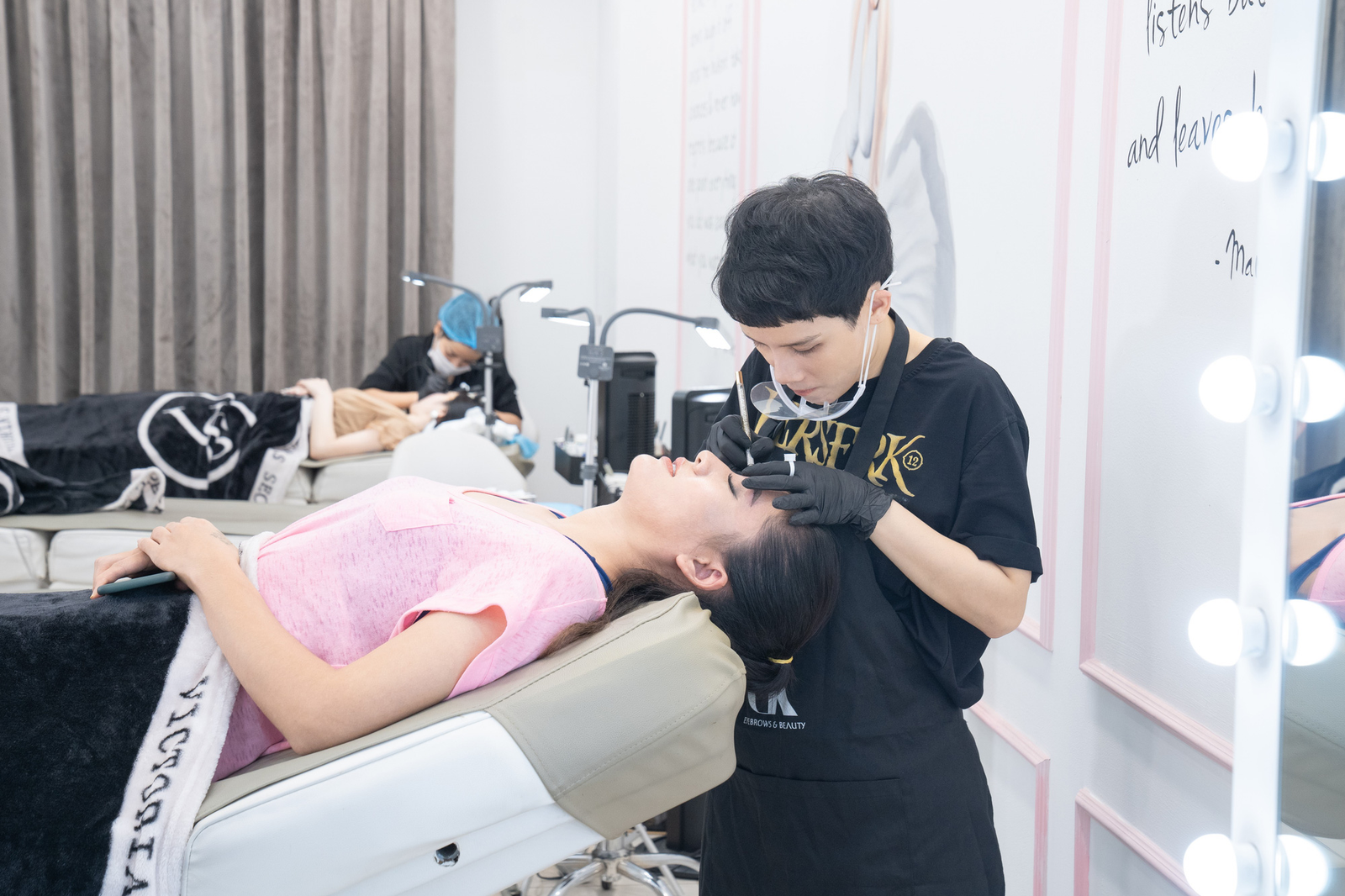
The Guide to Professional Medical Tattooing & Microblading in Hanoi: Natural Beauty, Maximum Safety
Achieving a well-defined face with elegant eyebrows and radiant, plump lips is every woman’s dream. In Hanoi, the beauty trend has undergone a massive shift. Instead of the outdated, overly dark, and sharp look, modern women are absolutely raving about European-standard semi-permanent makeup and microblading. This advanced technique celebrates natural, effortless beauty—delivering instant results with…

When people think of Vietnamese cuisine, savory icons like pho, banh mi, or fresh spring rolls usually steal the spotlight. However, to truly touch the culinary soul of this S-shaped land, you must dive into its sweet side. In Vietnam, dessert isn’t just a simple afterthought to a meal; it is an art form beautifully encapsulated in a single word: “Chè”.
For Western travelers, navigating the world of chè can initially feel like a bewildering adventure. Many often shy away from Asian sweets due to a fear of overwhelming sugar levels or the unfamiliar textures of beans and glutinous rice. However, Vietnamese chè boasts a highly sophisticated spectrum featuring a delicate, gentle sweetness that perfectly flatters the global palate. Here is your ultimate guide to the top 5 traditional Vietnamese chè desserts that every international visitor should try at least once, along with clean, welcoming spots that serve them with the perfect sweet-yet-refreshing balance.
The Ultimate Guide to Vietnam’s Iconic Chè Desserts
1. Chè Bưởi (Vietnamese Pomelo Dessert)
If you can only try one type of chè during your journey through Vietnam, give that opportunity to chè bưởi. This dish is a masterclass in culinary creativity, where the spongy white inner rind of the pomelo fruit—something usually discarded—is transformed into the star of the show. The rind undergoes a meticulous process of soaking, rinsing, and blanching to remove every trace of bitterness, leaving behind a delightfully crunchy and snappy texture. Cooked with rich, nutty mung beans and tapioca starch, the dessert emerges with a glossy, pudding-like consistency. Topped with a ladle of thick, rich coconut cream, the contrast between the crunchy pomelo rind and the velvety coconut milk will instantly win over even the most discerning palates.
2. Chè Khúc Bạch (Almond Panna Cotta Soup)
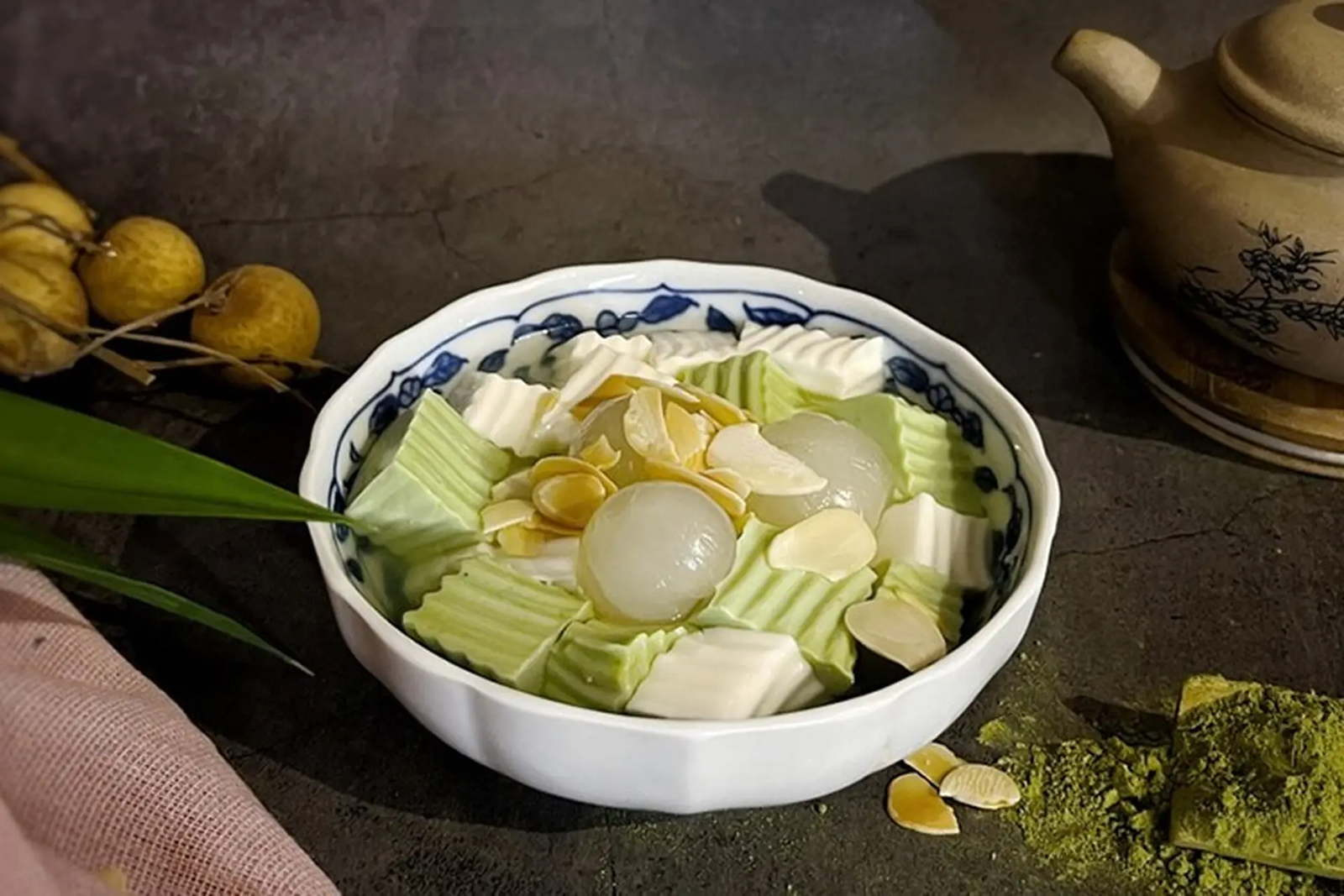
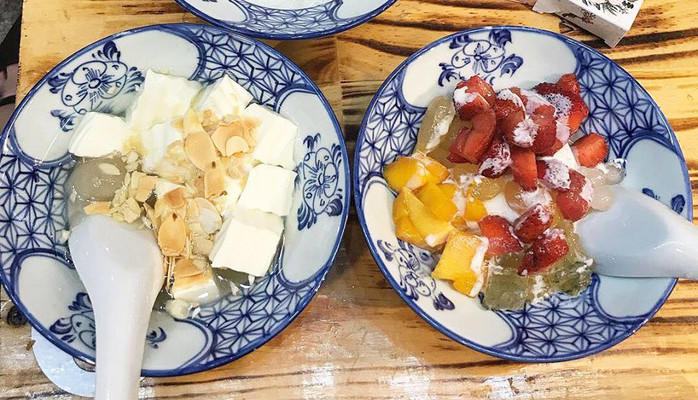
For those who prefer a light, low-sugar dessert profile, chè khúc bạch is the ultimate gateway sweet. This modern creation shares a striking resemblance to Italian panna cotta but has been cleverly adapted for the tropical climate. Soft, gelatinous cubes flavored with milk and almond melt effortlessly on the tongue, floating in a crystal-clear rock sugar syrup subtly infused with the natural aroma of pandan leaves or jasmine flowers. The bowl is beautifully garnished with toasted almond flakes and juicy, plump longans or lychees. The sweetness of chè khúc bạch is remarkably clean, subtle, and chilled—making it the perfect antidote to a humid afternoon.
3. Chè Hoa Cau (Mung Bean Sweet Soup)
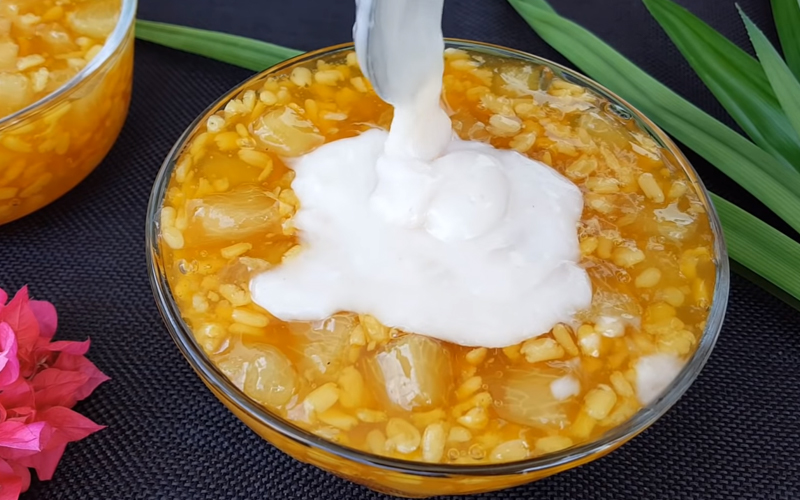
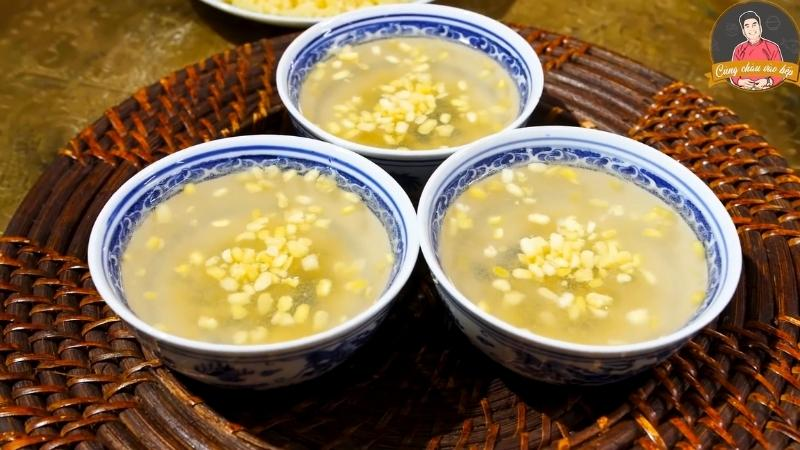
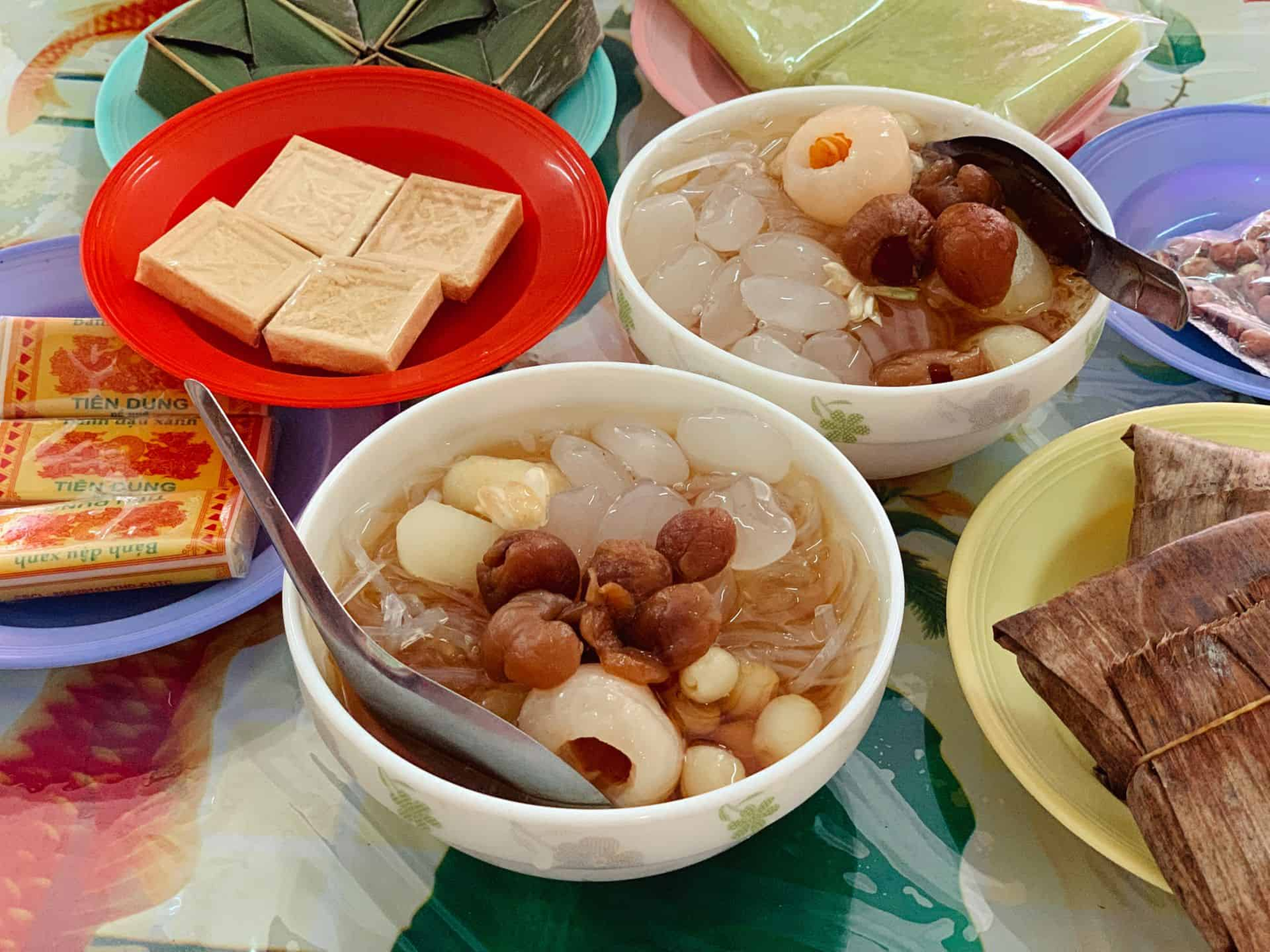
Steeped in the elegant culture of old Hanoi, chè hoa cau (also known as chè táo xòn) is the epitome of grace and simplicity. The name of the dessert stems from a deeply poetic imagery: golden, dehulled mung beans are steamed to perfection and scattered skillfully throughout a translucent arrowroot soup, looking exactly like tiny, golden areca palm blossoms fallen upon a courtyard floor. Delicately scented with natural pomelo flowers or jasmine, this dish offers a mild sweetness that gently unfurls on the palate. It is traditionally enjoyed while still warm and rustic, or drizzled with a bit of coconut milk to create a smooth, comforting texture that never feels overwhelmingly heavy.
4. Chè Ba Màu (Three-Color Dessert)
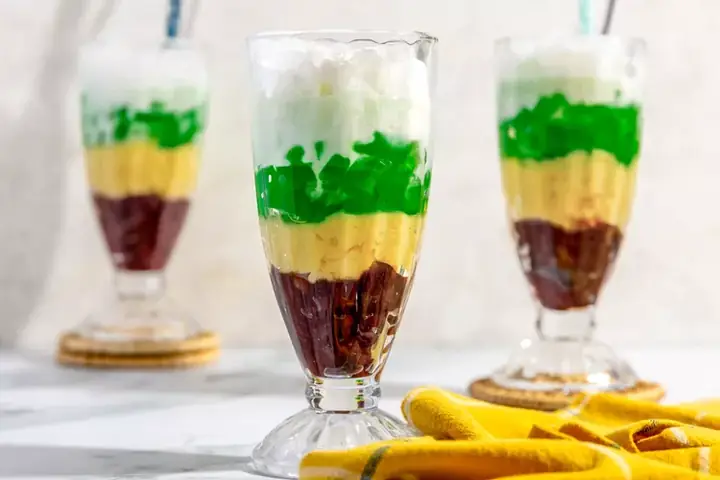
Vibrant, joyful, and full of energy, chè ba màu is a beloved Southern street food staple that mirrors the warm hospitality of the people of the South. Usually served in a tall glass, this treat is distinctly layered by color: the golden richness of mashed mung beans, the deep red of slow-cooked kidney beans, and the refreshing bright green of pandan jelly strips. The entire glass is crowned with a mountain of crushed ice and drenched in a rich, velvety coconut sauce. To enjoy it like a local, use your spoon to thoroughly mix the layers together. The medley of textures—from creamy and nutty to chewy, snappy, and icy—delivers an instant wave of tropical refreshment.
5. Chè Trôi Nước (Sticky Rice Balls in Ginger Syrup)
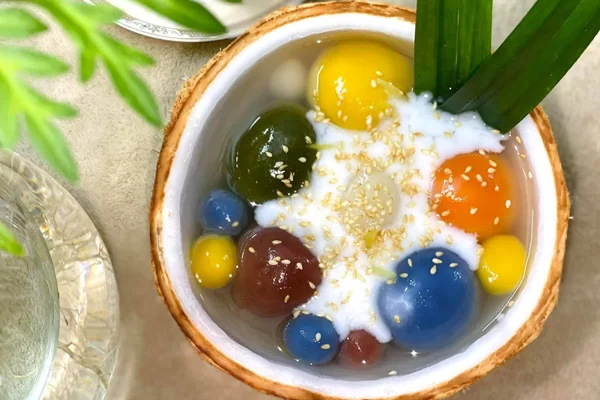
When the weather shifts to a chilly breeze, a warm bowl of chè trôi nước serves as the perfect companion to comfort your palate. The dish consists of round, pleasantly chewy balls made from premium glutinous rice flour, hugging a rich, smooth mung bean paste inside. These dumplings swim in a golden, shimmering cane sugar syrup infused with the pungent, warming spice of freshly crushed ginger. The bowl is finished with a sprinkle of toasted sesame seeds and a dash of white coconut cream. The sharp warmth of the ginger beautifully tempers the deep sweetness of the syrup, creating a balanced, soul-warming profile that international travelers often describe as a tropical, syrup-soaked twist on Japanese mochi.
Where to Eat: Clean & Cultured “Chè” Spots for Foreign Travelers
While finding a chè shop in Vietnam is effortless, finding venues that guarantee immaculate hygiene standards, offer expat-friendly menus, and serve a reduced-sugar recipe that highlights natural flavors can be a challenge. Here are our top curated recommendations:
Chè Mười Sáu (Hanoi)
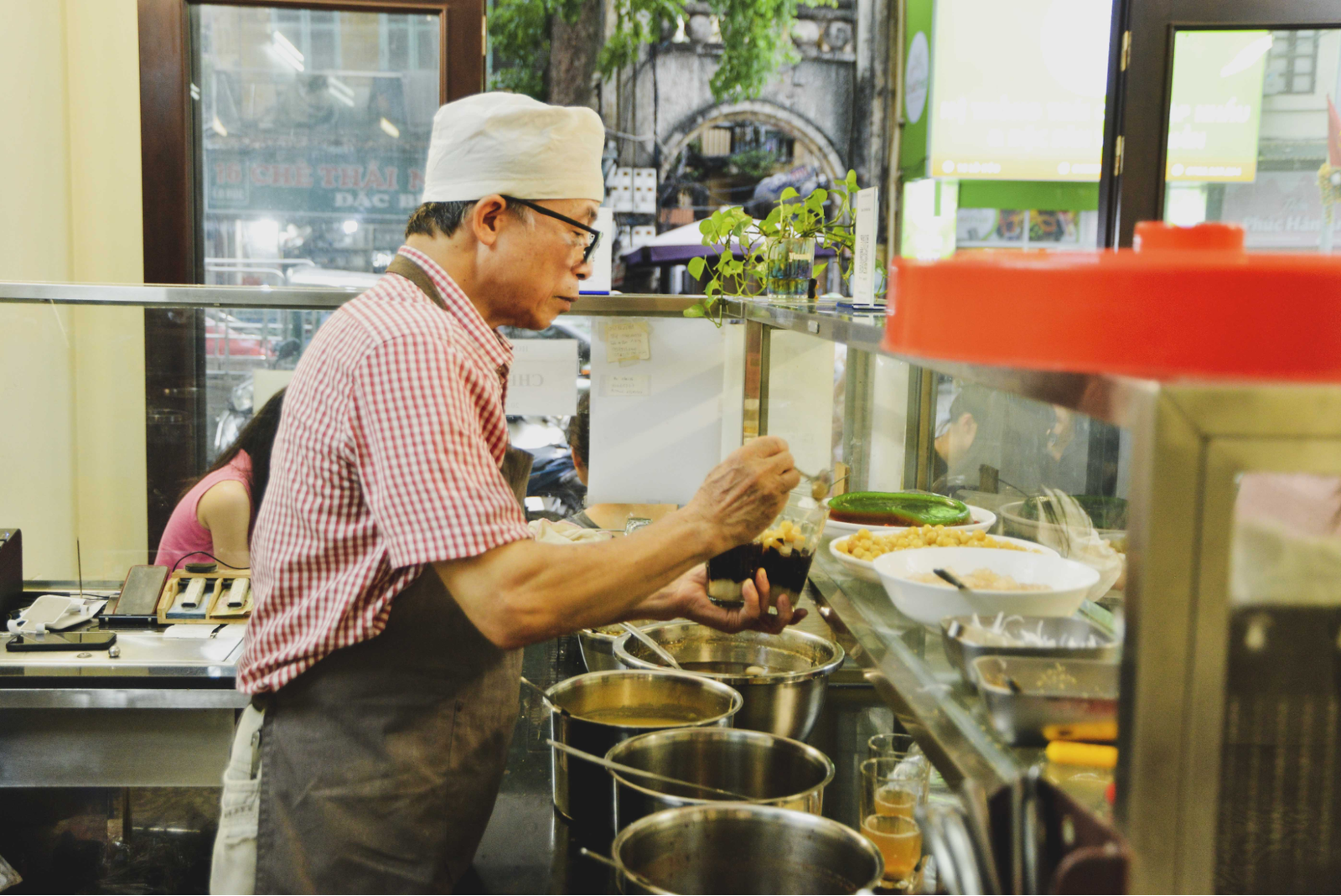
Located at 16 Ngo Thi Nham Street in the Hai Ba Trung District, Chè Mười Sáu is a nostalgic gem that has preserved the traditional flavors of Northern-style chè for decades. Despite its rustic, humble appearance that evokes memories of Hanoi’s subsidy era, the preparation area is exceptionally tidy and clean. The shop is famous for timeless classics such as chè hoa cau, chè bưởi, and black bean sweet soup. Their recipe relies entirely on the mild sweetness of rock sugar rather than industrial sweeteners, allowing the delicate aromas of jasmine and pomelo blossoms to truly shine—perfectly matching the sophisticated palate of international guests.
Chè Nhà Suvy (Hanoi & Ho Chi Minh City)
If you want to experience chè khúc bạch done exactly right in a modern, spotless environment, Chè Nhà Suvy is an unmissable destination. Originally a massively popular spot on Quang Trung Street in Hanoi, Suvy has now expanded to Saigon, winning over international tourists with its neatness and strict hygiene. The panna cotta cubes here are flawlessly creamy and chewy, swimming in a pure, refreshing rock sugar syrup. Complemented by juicy lychees and crunchy sliced almonds, it provides a high-end dessert experience that is incredibly gentle on the stomach.
Chè Hiển Khánh (Ho Chi Minh City)
For a deep dive into Southern sweet soup culture, head over to Chè Hiển Khánh on Nguyen Dinh Chieu Street in District 3. Operating since 1959, the space feels like a poetic pause in time—spacious, airy, and immaculately clean. The signature touch that defines their brand is the use of raw agar sugar and the practice of infusing fresh jasmine flowers into their syrups overnight. Because of this, everything from their chè bưởi to their various clear and black grass jellies carries an incredibly light, floral sweetness, making it the ideal pitstop for global travelers looking to explore authentic local flavors with total peace of mind.
Conclusion
Vietnamese chè is a beautiful mirror reflecting the nation’s overarching culinary philosophy: a harmony of contrasting textures, a deep respect for natural ingredients, and a mindful approach to balancing flavors. From the snappy, aromatic freshness of chè bưởi to the silky, heat-quenching embrace of chè khúc bạch, every single bowl opens up a unique window into the cultural life of the Vietnamese people. On your upcoming journey to Vietnam, skip the familiar fruit platters and standard ice cream scoops for a day. Instead, pull up a chair at a reputable chè shop, order a refreshing bowl, and experience a very distinct, poetic kind of sweetness that belongs solely to this beautiful land!