
Hidden Gems of Central Vietnam: Exploring Hue’s Imperial City & Tombs

The Guide to Professional Medical Tattooing & Microblading in Hanoi: Natural Beauty, Maximum Safety
Achieving a well-defined face with elegant eyebrows and radiant, plump lips is every woman’s dream. In Hanoi, the beauty trend has undergone a massive shift. Instead of the outdated, overly dark, and sharp look, modern women are absolutely raving about European-standard semi-permanent makeup and microblading. This advanced technique celebrates natural, effortless beauty—delivering instant results with…
Hue is not a destination for the hurried soul. When thinking of the S-shaped land, travelers often recall the vibrant glow of Hoi An or the dynamic pulse of Da Nang. However, for those captivated by the beauty of time’s passage and the intricate mastery of ancient architecture, Hue remains the ultimate pilgrimage. Beyond the well-trodden paths of the Imperial City walls, this journey will lead you through majestic mausoleums and serene royal tea houses—where the spirit of the Nguyen Dynasty still breathes in rhythmic stillness.
1. The Imperial City: A Symbol of Authority and Eastern Philosophy
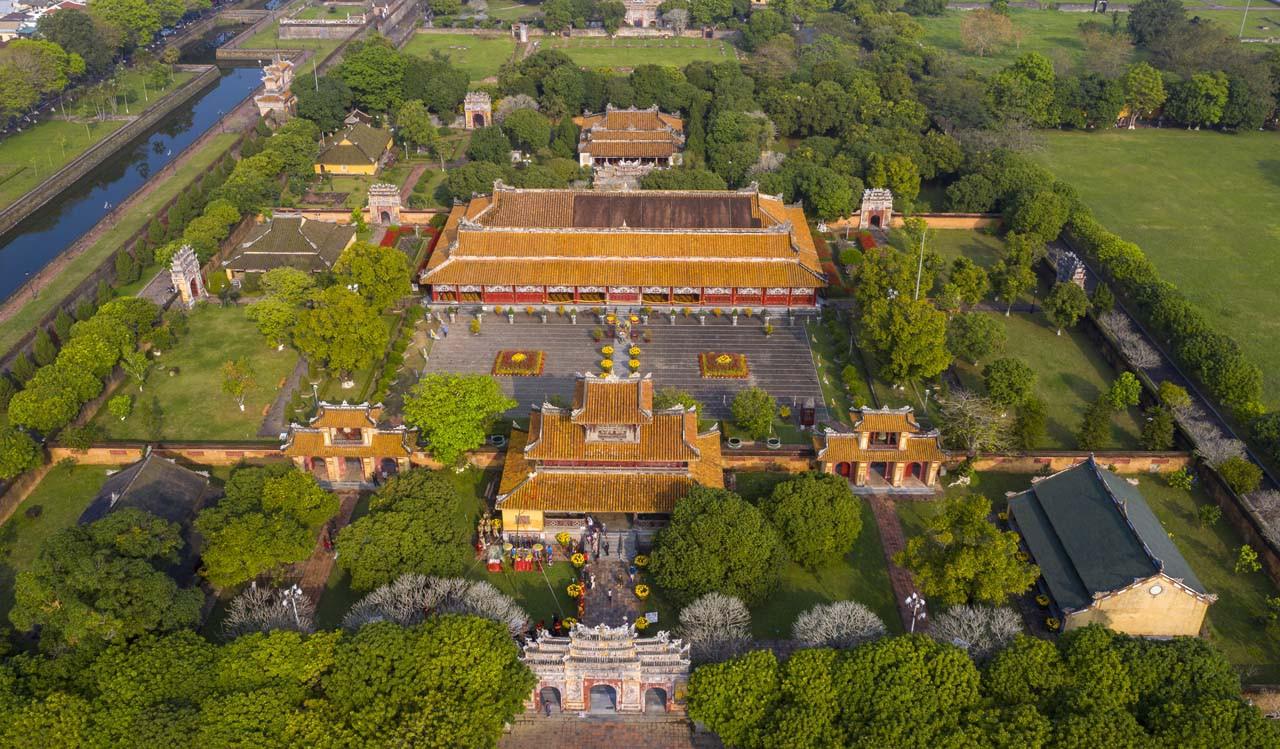
Before delving into the “hidden gems,” one cannot overlook the Imperial City (The Citadel)—the beating heart of Hue. This site is a flawless fusion of traditional royal architecture and Eastern geomancy (Feng Shui). Passing through Ngo Mon Gate, you step into a realm of yellow glazed roof tiles, crimson lacquered wooden columns, and royal gardens where emperors once strolled. Each structure, from the Thai Hoa Palace to the Dien Tho Residence, is more than just a dwelling; it is a masterpiece of art asserting the cultural identity of an independent nation.
2. A Ranking of the Most Architecturally Stunning Royal Tombs
Each Nguyen Emperor designed his own “earthly paradise” for eternal rest. From a historical and architectural perspective, these three tombs stand out as the most unique:
The Tomb of Minh Mang (Hieu Lang): Absolute Harmony
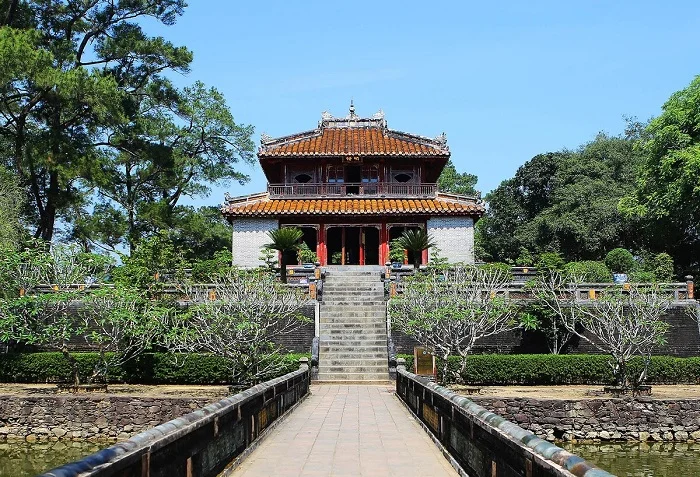
Renowned as the most majestic of all, Minh Mang’s tomb is a poem written in stone and water. The architecture strictly adheres to a symmetrical layout along a “sacred path” (Thần đạo) stretching from the main gate to the burial site. Shimmering lakes wind around pavilions, creating a sense of ethereal weightlessness. If you appreciate balance and Confucian philosophy, Minh Mang’s tomb will leave you in awe of how man-made structures can harmonize so perfectly with grand nature.
The Tomb of Tu Duc (Khiem Lang): The Poet’s Melancholy
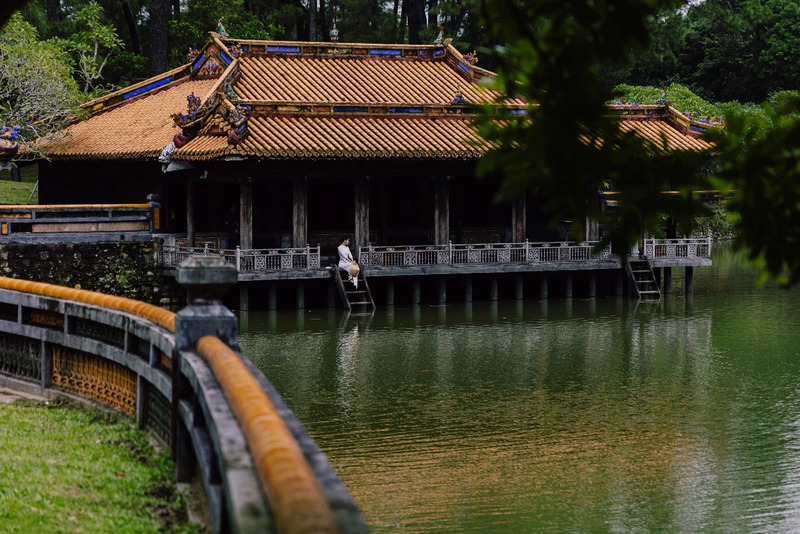
In stark contrast to the solemnity of Minh Mang, Tu Duc’s tomb bears the deeply personal touch of a poet-king. The entire complex exudes a romantic, contemplative atmosphere with winding brick paths, fragrant lotus ponds, and lakeside pavilions. It feels less like a mausoleum and more like a royal park, where the King used to retreat to compose poetry and listen to music while still alive. The architecture here breaks free from rigid rules, reflecting the soulful and sensitive heart of the monarch.
The Tomb of Khai Dinh (Ung Lang): The Pinnacle of Porcelain Mosaic Art
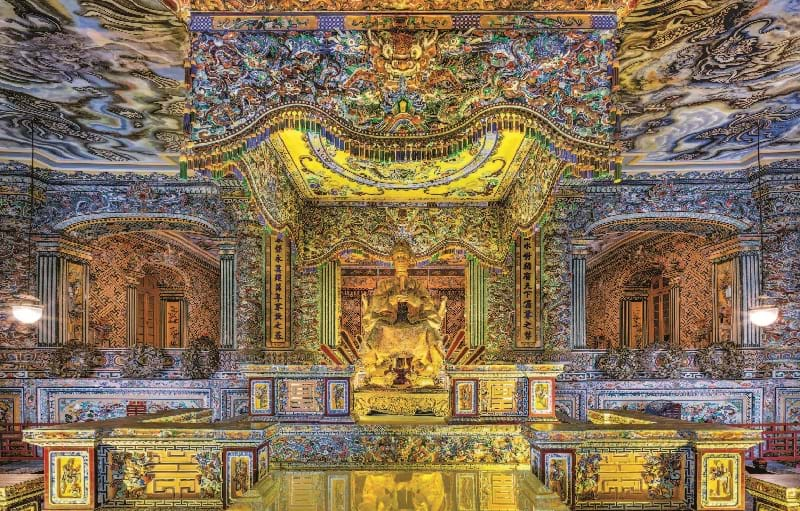
Despite having the smallest footprint, Khai Dinh’s tomb was the most labor-intensive and costly to build. It represents a unique—and sometimes controversial—blend of modern Western architecture and traditional Vietnamese artistry. The crown jewel is Thien Dinh Palace, where the interior is adorned with breathtakingly intricate mosaics of porcelain and colored glass. Features like the “Nine Dragons Amidst the Clouds” ceiling fresco (painted by feet) and elaborate floral motifs made from broken ceramics create an opulence that is truly overwhelming.
3. Royal Tea Houses: Where Time Stands Still
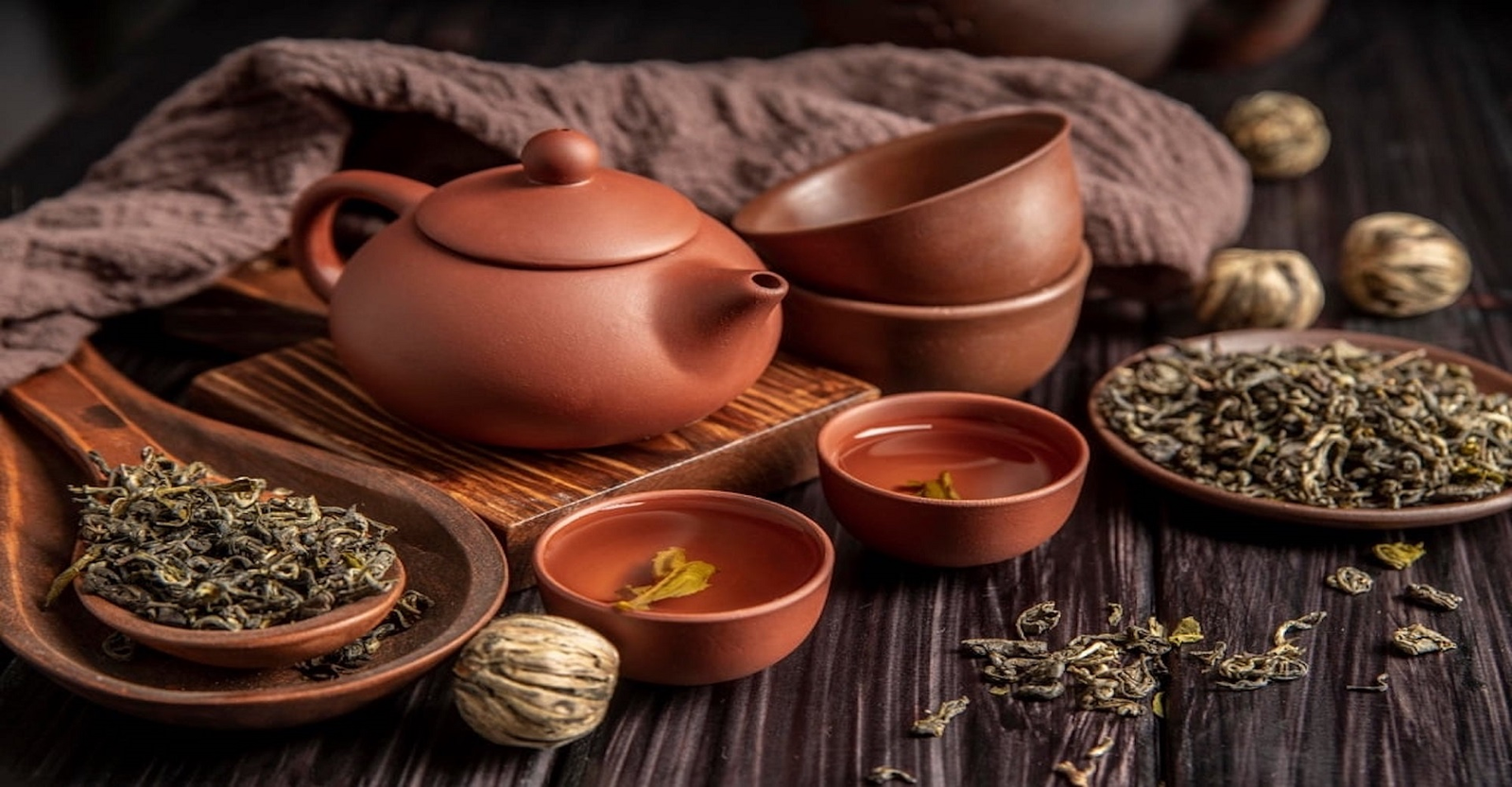
After immersing yourself in history, there is no better way to unwind than finding a quiet space to enjoy tea—a refined cultural staple of the old Hue aristocracy.
- Tra Dinh Vy Da: Tucked away in an ancient garden that epitomizes the “Hue Garden House” style, this is where you find absolute silence. The sound of trickling water, the scent of lotus and jasmine tea, and the traditional wooden “nha ruong” architecture allow you to truly feel the “slow living” pace of the ancient capital.
- Khong Gian Xưa (Ancient Space): Living up to its name, this tea house feels like a miniature museum, filled with antiques and elaborately carved woodwork. Sipping a cup of royal herbal tea while listening to the haunting melodies of Nha Nhac (Court Music) is a sensory awakening for any lover of nostalgia.
Conclusion
Hue is not merely dry history found in textbooks; it is a living entity found in every carving on a tomb’s roof and every rising wisp of tea steam. By exploring these “hidden gems,” you will realize that architecture is more than just lifeless stone—it is a vessel for the warmth, soul, and aspirations of a heroic era. Come to Hue with an open heart, and you will find that history has never felt so close.
Pro Tip: The best time to visit the tombs is in the early morning or at late afternoon to avoid the harsh sun and fully absorb the quiet, haunting beauty of the ancient structures.