A Cultural Guide to Duong Lam Ancient Village: Hanoi’s Living Museum

The Guide to Professional Medical Tattooing & Microblading in Hanoi: Natural Beauty, Maximum Safety
Achieving a well-defined face with elegant eyebrows and radiant, plump lips is every woman’s dream. In Hanoi, the beauty trend has undergone a massive shift. Instead of the outdated, overly dark, and sharp look, modern women are absolutely raving about European-standard semi-permanent makeup and microblading. This advanced technique celebrates natural, effortless beauty—delivering instant results with…
A Journey Back in Time to the Laterite Village 50km from Hanoi
Amidst the bustling, neon-lit rhythm of modern Hanoi, there lies a sanctuary where time seemingly stands still, preserving the serene aura of centuries past. Located just 50 kilometers west of the city center in Son Tay Town, Duong Lam Ancient Village emerges as a nostalgic fragment of history. Revered as the “living museum” of the Red River Delta’s wet-rice civilization, Duong Lam is far more than a mere tourist destination; it is a cultural and spiritual pilgrimage that invites travelers to step back in time and touch the very soul of ancient rural Vietnam.
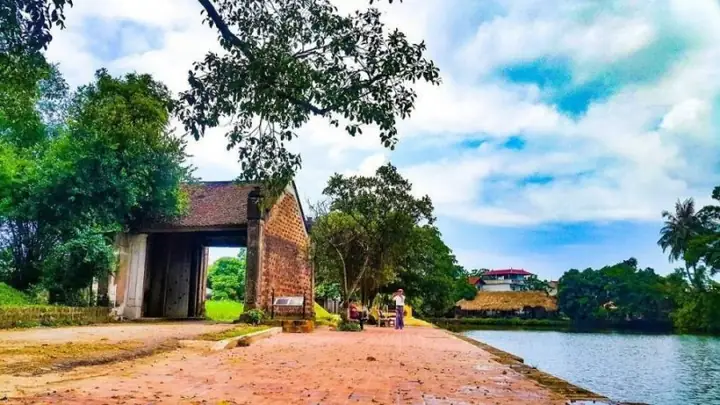
Mong Phu Village Gate – The First Brushstroke of a Nostalgic Painting
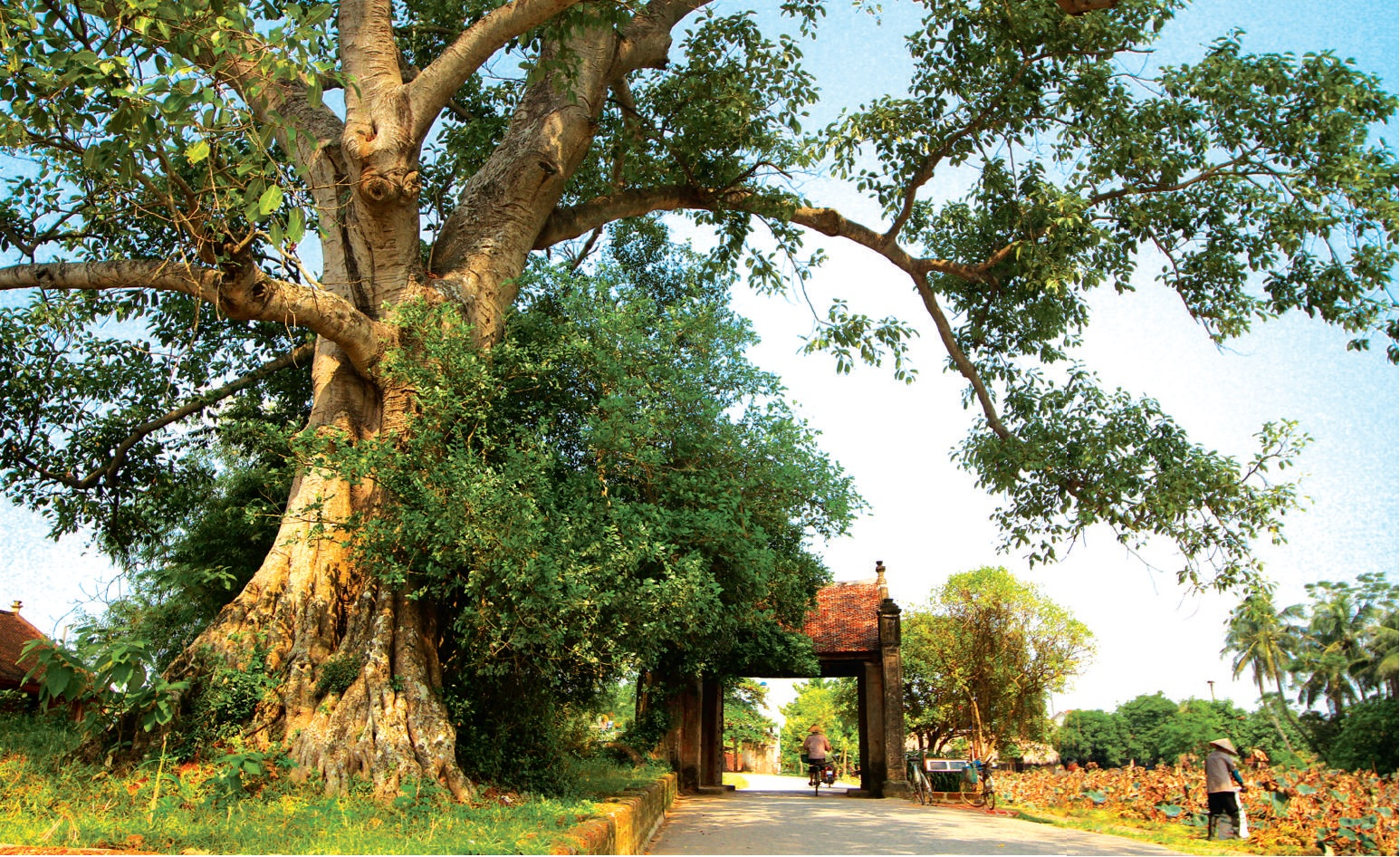
The journey into Duong Lam truly begins the moment you stand before the Mong Phu Village Gate. Unlike the grand, imposing entrances seen elsewhere, Mong Phu welcomes visitors with a humble, rustic charm. It features the traditional “thuong gia ha kieu” architecture (a house-above-bridge structure) typical of the Northern Delta. Built in 1553 during the reign of King Le Than Tong, the weathered ironwood gate leans against a centuries-old banyan tree that casts a generous, cool shade. Stepping through this archway, the city’s traffic noise fades into oblivion, replaced by a tranquil stillness, the rustle of fallen leaves, and the faint scent of straw drifting on the summer breeze.
Fish-Bone Brick Roads and the Art of Laterite Architecture
The true “soul” of Duong Lam lies in its unique walls and alleys crafted from laterite (da ong). This local red clay, rich in iron oxide, is dug from deep underground and meticulously chiseled into sturdy, blocky bricks. Weathered by centuries of sun and rain, the laterite turns a deep honey-gold color, porous yet remarkably solid. The village roads are not straight but wind elegantly in a fish-bone pattern, paved with slanted bricks that resemble dragon scales. This ingenious traditional design ensures the alleys remain dry immediately after heavy rains and historically served to confuse intruders trying to penetrate deep into the village.
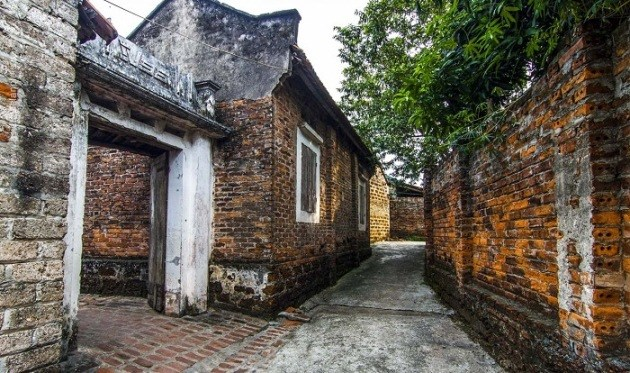
Centuries-Old Houses – Where Time Safely Rest
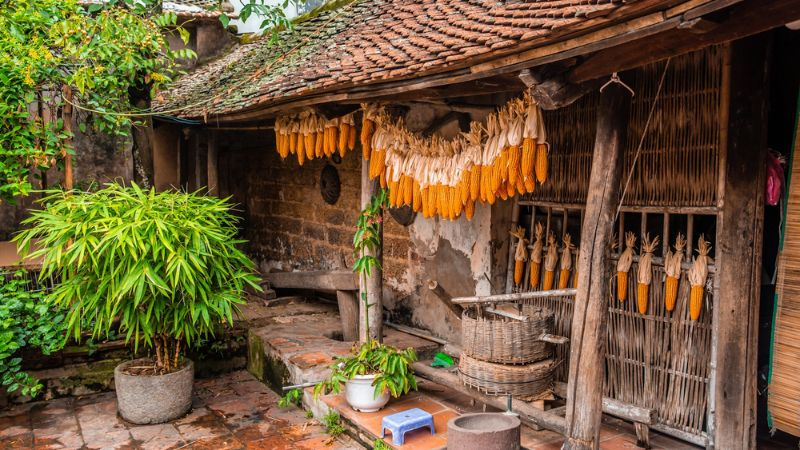
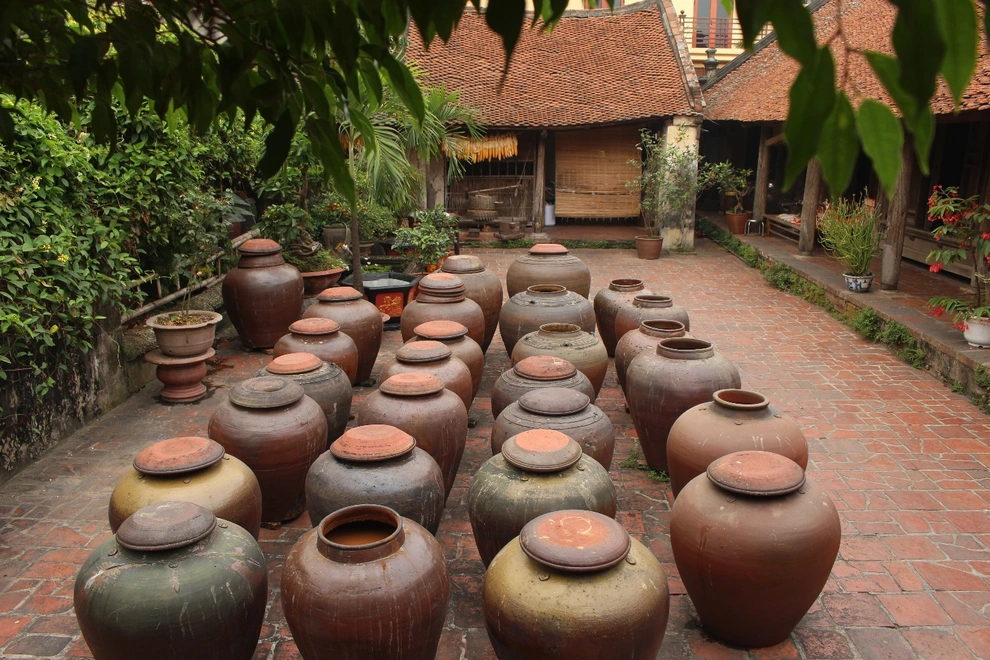
Duong Lam still shelters nearly a thousand traditional houses, with some dating back 300 to 400 years—most notably the ancestral homes of Mr. The, Mr. Hung, and Mr. Lam. The architecture strictly adheres to the traditional 3- or 5-compartment layout, supported by precious ironwood or jackfruit wood pillars and beams. Inside, a solemn ancestral altar occupies the central space, flanked by exquisitely mother-of-pearl inlaid wooden beds and cabinets. The spacious courtyards are invariably adorned with rows of ceramic jars fermenting soy sauce (tuong) under the golden sun. Today, successive generations of families still live in these homes, guarding their family heritage like a sacred heirloom.
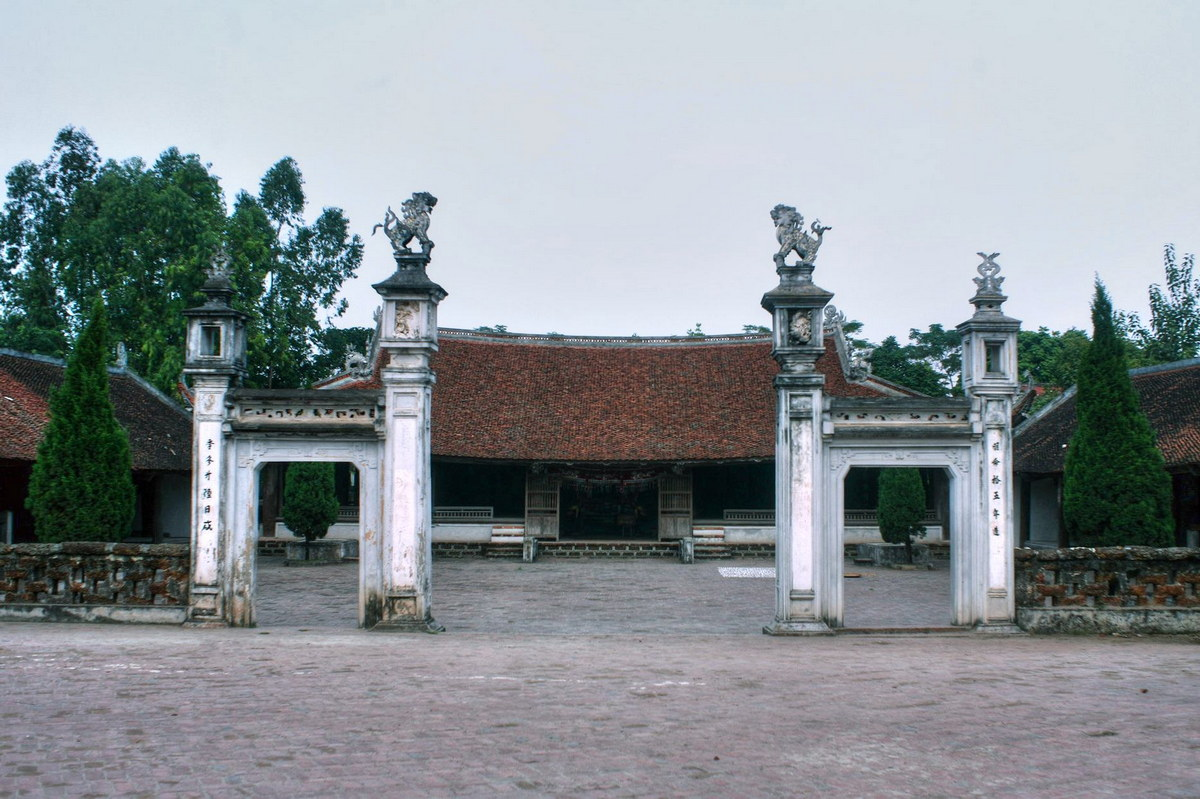
Mong Phu Communal House – The Spiritual Heart of the Community
Situated at the very center of the village, Mong Phu Communal House, built in 1684, stands as the grandest and most vital spiritual landmark. The structure represents the pinnacle of the Later Le Dynasty’s wood-carving artistry, featuring fluid carvings of dragons, clouds, and flora on its beams and rafters. The expansive courtyard, paved with traditional Bat Trang bricks, acts as the open-air theater for all major community events, from village festivals and spiritual rituals to rustic morning markets. Standing in the courtyard and gazing at the upturned, shoe-shaped tiled roofs sweeping against the blue sky, one truly grasps the sacredness of “homeland” in the Vietnamese consciousness.
The Land of Two Kings – A Cradle of Legendary Heroes
Beyond its architectural marvels, Duong Lam is celebrated as a land of extraordinary people—the only place in Vietnam recognized as the cradle of two kings: Phung Hung (The Great Father King) and Ngo Quyen. A short distance from the village center lie the Phung Hung Temple and the Ngo Quyen Mausoleum, nestled among shady, peaceful hills. Visiting these sanctuaries, travelers are treated to heroic tales of resistance against foreign invaders, brilliant military tactics, and fierce patriotism. The spiritual energy of this land serves as an invisible thread, reminding future generations of their glorious roots and national pride.
Flavors of Home: Fermented Soy Sauce and Che Lam Tea Cake
No journey back to the past is complete without savoring the rustic, comforting delicacies of Duong Lam. The village is famous for its bamboo-roasted pork (thịt quay đòn), boasting a crackling skin infused with the aroma of guava leaves, best dipped in rich, naturally sweet Duong Lam soy sauce. After lunch, find a cozy spot under the porch of an ancient house, order a hot cup of fresh green tea, and pair it with a piece of che lam. This chewy cake made from glutinous rice, ginger, and peanuts, alongside crispy peanut candies, offers a simple yet profoundly memorable culinary experience that lingers on the palate long after you leave.
Conclusion
Duong Lam Ancient Village does not strive to be a flashy tourist hotspot; it chooses to exist quietly, like a gentle, poetic interlude in the symphony of the modern era. A trip to Duong Lam is not merely about admiring laterite walls or moss-covered roofs—it is an internal journey. It is a place to find balance, to deeply understand cultural roots, and to feel the steady pulse of history breathing through every ancient home. If the frantic pace of modern life ever leaves you weary, let Duong Lam welcome you back into the peaceful, timeless embrace of the past.
Travel Tips for Your Journey:
- Distance: ~50km from central Hanoi (approximately a 1.5-hour drive via Thang Long Avenue or National Highway 32 by motorbike or car).
- Best Time to Visit: The harvest season (May to June) when the village is bathed in the golden hue of ripe rice and drying straw, or the traditional village festival season (the 1st lunar month).
- Best Way to Explore: Renting a bicycle at the village entrance is highly recommended to leisurely navigate the narrow, charming alleys.