
A Guide to Vietnamese Noodles Beyond Phở: How to Distinguish Hu Tieu, Bun Bo, Cao Lau, Banh Canh, and Mien

The Guide to Professional Medical Tattooing & Microblading in Hanoi: Natural Beauty, Maximum Safety
Achieving a well-defined face with elegant eyebrows and radiant, plump lips is every woman’s dream. In Hanoi, the beauty trend has undergone a massive shift. Instead of the outdated, overly dark, and sharp look, modern women are absolutely raving about European-standard semi-permanent makeup and microblading. This advanced technique celebrates natural, effortless beauty—delivering instant results with…

When international travelers think of Vietnamese cuisine, Phở is almost always the star that steals the spotlight. However, if you only stop at Phở, you are missing out on a massive, diverse, and deeply cultural universe of noodle dishes that stretches from North to South.
For foreign tourists, facing a menu packed with terms like Bún, Hủ tiếu, Cao lầu, Miến, and Bánh canh can induce a mild existential crisis. This in-depth guide will help you distinguish the unique characteristics of each regional noodle type, giving you the confidence to order like a true local.
1. Bún Bò Huế (Central Vietnam) – The Bold and Plump Rice Vermicelli
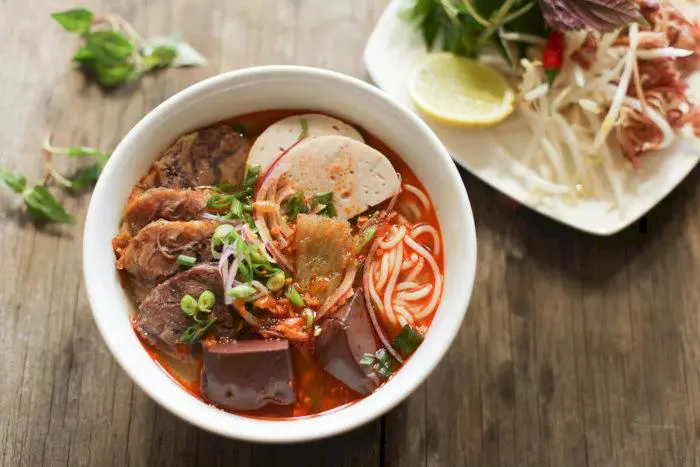
While Phở features flat, soft, and thin ribbons, the legendary Bún Bò Huế from the ancient capital of Huế calls for an entirely different type of noodle. The rice vermicelli used in this dish is significantly thicker than the standard bún found in Northern or Southern Vietnam, with a diameter of about 2–3mm.
Authentic Bún Bò Huế noodles are crafted from rice flour blended with a precise ratio of tapioca starch. This traditional technique gives the noodle a pleasant chewiness—pliant enough not to break apart, yet soft enough to yield gently with every bite. As you enjoy it, you will notice how these thick, round strands perfectly absorb the robust, lemongrass-and-shrimp-paste-infused beef broth. It is a bold texture that mirrors the resilient and passionate spirit of Central Vietnam.
2. Hủ Tiếu Nam Vang (Southern Vietnam) – The Thin, Chewy Pearl of the South
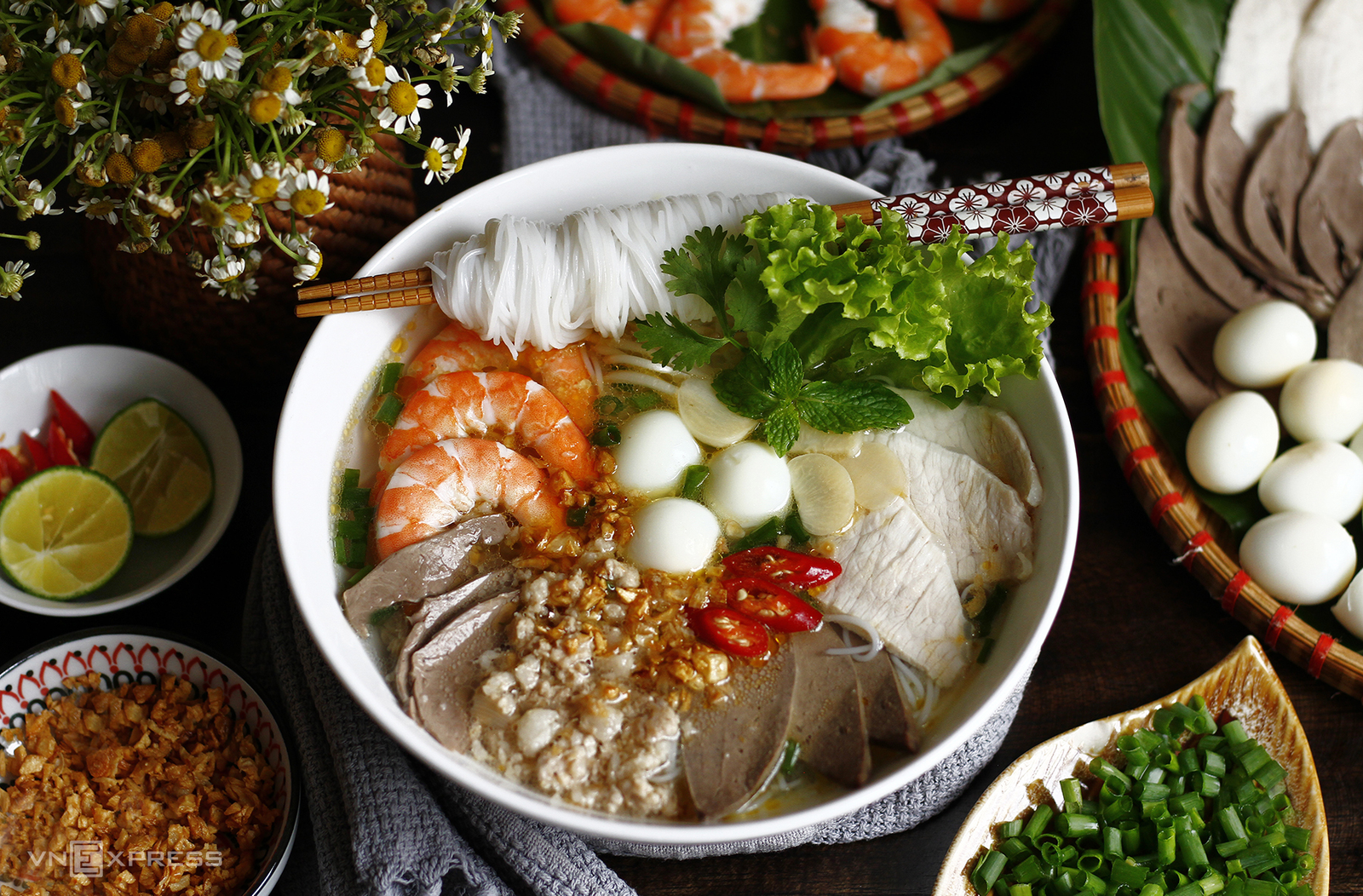
Moving south, if Phở is the “king” of Northern breakfasts, Hủ tiếu is undoubtedly the “emperor” of Saigon’s late-night food stalls and the Mekong Delta. The ultimate key to distinguishing hủ tiếu from phở or bún lies in its unmistakable chewiness and slender shape.
The star of this dish—particularly the versions from Mỹ Tho or Nam Vang—is made from high-quality local rice flour and thoroughly sun-dried to achieve a very specific texture. The strands are as thin as glass noodles, but once flash-blanched in boiling water, they turn into a springy, slightly al dente bite (dai) that is incredibly satisfying to chew. When ordered dry (Hủ tiếu khô), these delicate strands beautifully hold onto the thick, savory dark soy sauce blend, marrying the flavors of pork, shrimp, and quail eggs into a texture profile completely distinct from the silky softness of Phở.
3. Cao Lầu Hội An (Central Vietnam) – A Centuries-Old Culinary Mystery
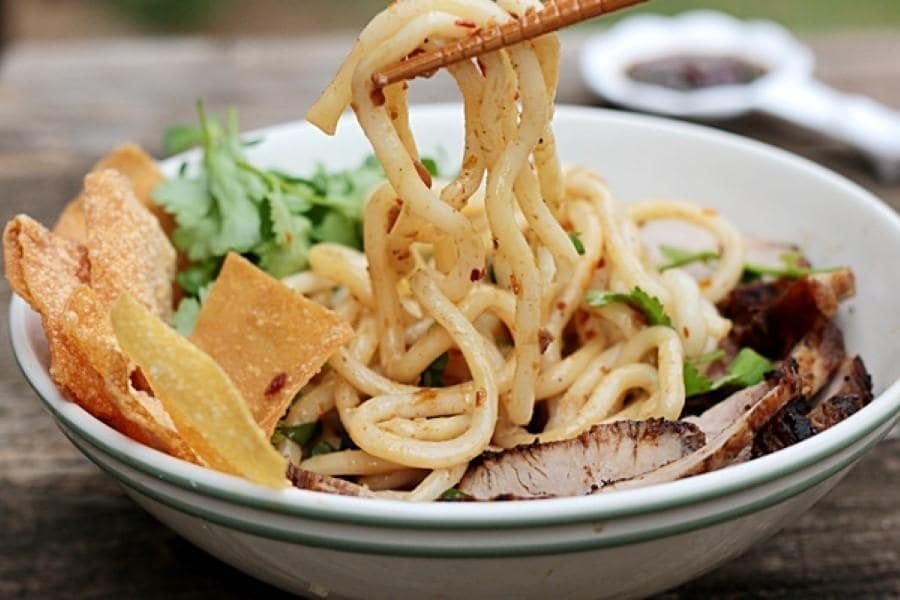
If there is one noodle that challenges every preconceived notion of what “noodle” means, it is Cao lầu—the proud culinary crown jewel of Hội An Ancient Town. Cao lầu is neither bún nor phở; it is a thick, rustic, square-cut noodle with a signature smoky yellow or pale brown hue.
The magic of the Cao lầu noodle lies in its legendary, highly localized preparation: the rice must be soaked in water clarified with ash from native trees on the nearby Chàm Islands, and the water used to grind the rice must be drawn from the thousand-year-old Bá Lễ ancient well. Thanks to this specific mineral composition and alkalinity, the noodles develop a firm, dry, and distinctly chewy texture when steamed. Served dry with minimal broth, Cao lầu is tossed with savory char siu pork, crispy fried rice cracker squares, and fresh herbs from Tra Que village, offering a beautifully rustic and complex bite.
4. Bánh Canh (Central & Southern Vietnam) – The Thick, Comforting Comfort Food
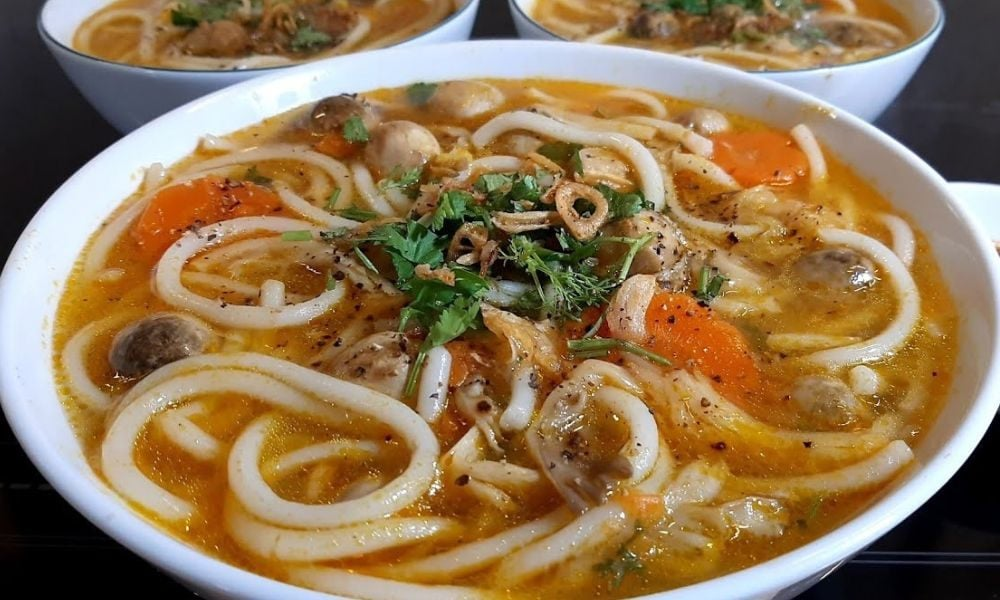
If you are looking for the absolute thickest noodle in the Vietnamese culinary catalog, look no further than Bánh canh. Ubiquitous along the Central Coast and throughout the South, these noodles are noticeably plump, round, and shorter than your average bún or phở.
Bánh canh is a true chameleon of the noodle world because its texture depends entirely on the flour used. Strands made from pure rice flour (bánh canh bột gạo) have an opaque white color, cooking up into a tender, melt-in-your-mouth bite. On the other hand, strands made with tapioca starch (bánh canh bột lọc) are translucent, offering a slippery, dense, and bouncy texture that naturally thickens the savory broth. Eating bánh canh is an incredibly comforting experience as the thick, plump noodles slide effortlessly down your palate.
5. Miến (Nationwide) – The Elegant and Translucent Glass Noodles
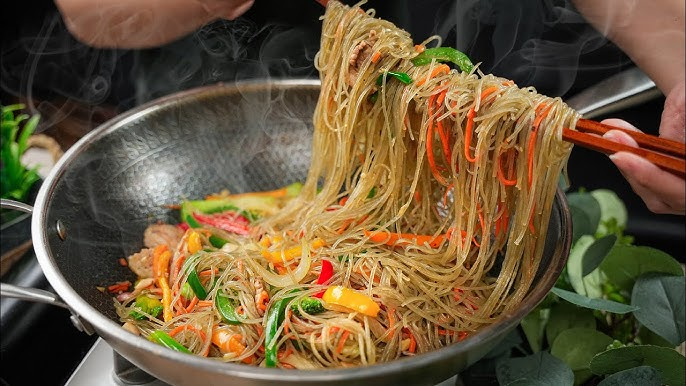
Often affectionately referred to by foreigners as “Glass Noodles” or “Cellophane Noodles,” Miến (or bún tàu in the South) offers an elegant texture that stands completely apart from its rice-based siblings.
High-quality, traditional miến is made from arrowroot starch (củ dong riềng). In their dry form, the strands are thin, stiff, and opaque greyish-white. However, once submerged in a steaming broth (such as Northern chicken miến or Central eel miến), they transform into beautiful, crystal-clear threads. Miến is celebrated for its incredible elasticity and resilience; it maintains a pleasant snap and never gets soggy or mushy, even if left in hot broth for a while. It provides a light, clean, and refreshing dining experience.
The Ultimate Pocket Guide for Travelers
To ensure you never get lost in translation at a Vietnamese eatery, here is a quick-reference summary:
| Dish Name | Noodle Type | Shape & Size | Texture | Regional Epicenter |
| Phở | Phở noodles | Flat, medium ribbons (1-2mm) | Silky, soft, smooth | North Vietnam (Hanoi) |
| Bún Bò | Thick vermicelli | Round, thick, plump (2-3mm) | Soft yet springy and firm | Central Vietnam (Huế) |
| Hủ Tiếu | Hủ tiếu noodles | Straight, very thin (<1mm) | Al dente, chewy, bouncy | South Vietnam (Saigon/Mỹ Tho) |
| Cao Lầu | Cao lầu noodles | Square-cut, thick, rustic, yellow | Firm, dry, distinctly dense | Central Vietnam (Hội An) |
| Bánh Canh | Bánh canh noodles | Very thick, round, short | Tender (rice flour) or Slippery & gummy (tapioca) | Central & South Vietnam |
| Miến | Glass noodles | Thin, delicate, translucent | Elastic, holds a firm snap | Nationwide (Highly iconic in the North) |
Conclusion
The world of Vietnamese noodles is an endless journey of discovery, where every region you cross and every bowl you order tells a story of local geography, climate, and heritage. Understanding the difference between the plump vermicelli of Huế, the snappy hủ tiếu of the South, the exclusive ash-water Cao lầu of Hội An, the comforting thickness of Bánh canh, or the crystal elegance of Miến is more than just a way to avoid ordering mistakes—it is your key to unlocking the true depth of Vietnamese gastronomy.
On your next trip to Vietnam, step out of your Phở comfort zone and treat yourself to a bowl of dry Hủ tiếu, a rich Bánh canh cua, or a delicate Miến gà. Your palate will thank you!