
The Ultimate Guide to Vietnamese Tropical Fruits: What to Try and Where to Buy

The Guide to Professional Medical Tattooing & Microblading in Hanoi: Natural Beauty, Maximum Safety
Achieving a well-defined face with elegant eyebrows and radiant, plump lips is every woman’s dream. In Hanoi, the beauty trend has undergone a massive shift. Instead of the outdated, overly dark, and sharp look, modern women are absolutely raving about European-standard semi-permanent makeup and microblading. This advanced technique celebrates natural, effortless beauty—delivering instant results with…


Vietnam has long been dubbed a paradise for tropical fruits. Thanks to its unique climate and fertile soil, this S-shaped land boasts incredible fruits that leave foreign travelers in awe and locals bursting with pride. However, amidst the vibrant and chaotic local markets, how do you spot the perfectly ripe ones? And how can you buy clean, high-quality fruits at the right price without falling victim to “overpricing” (inflated tourist prices)?
Let’s dive into the ultimate guide to exploring Vietnam’s tropical fruit world, focusing on the top five “superstars” of the region.
1. Top 5 Vietnamese Tropical Fruits You Must Try
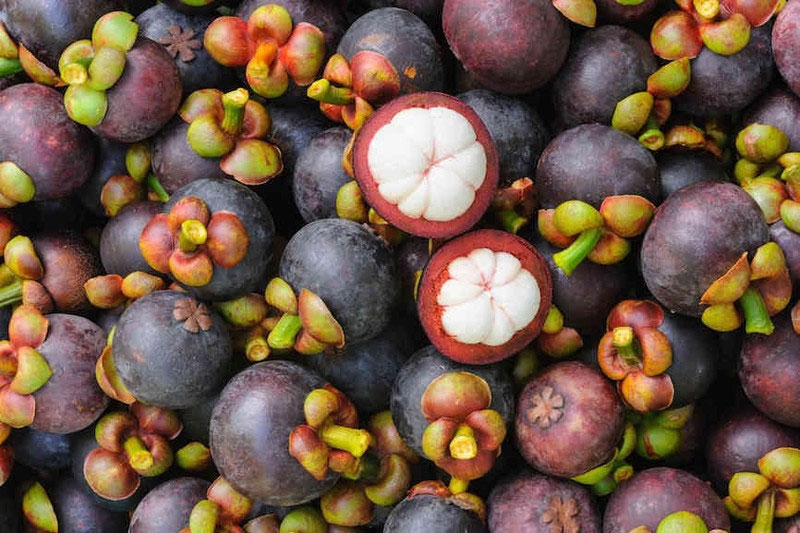
Mangosteen (Măng Cụt) – The “Queen” of Tropical Fruits
Mangosteen possesses a truly regal appearance, with a thick, hard, deep-purple rind protecting the snow-white, juicy segments inside. Upon taking a bite, you will experience a delicate balance of elegant sweetness and mild tartness that melts instantly on your tongue. Not only is it incredibly delicious, but mangosteen is also known as a natural remedy to cool down your body during scorching summer days.
- How to pick the best one: Flip the mangosteen upside down and look at the “petal” pattern at the bottom. The number of petals corresponds to the exact number of segments inside; fruits with more petals (around 6–8) usually have smaller or seedless segments. When buying, gently squeeze around the rind. If it yields slightly and feels elastic, it is perfectly ripe. If it feels rock-hard, it is either spoiled or harvested too early.
Rambutan (Chôm Chôm) – The Vibrant Red of the Mekong Delta
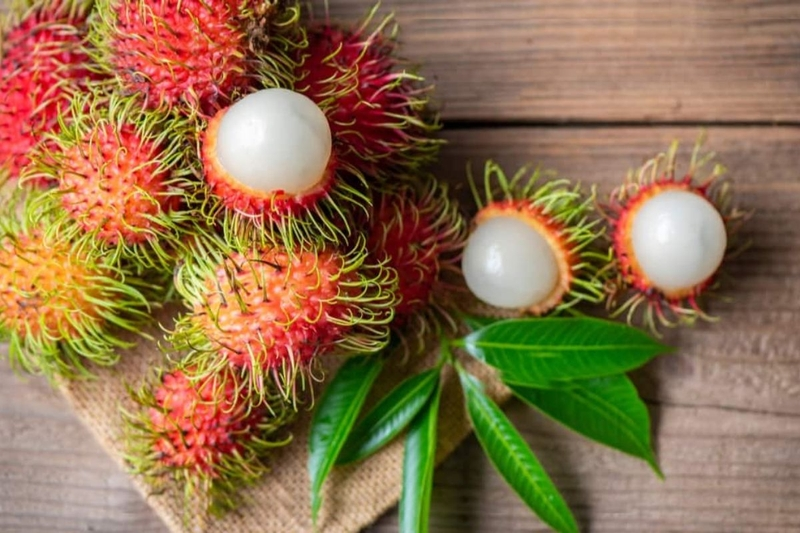
When it comes to the Mekong Delta during harvest season, one cannot forget the image of rambutan orchards painting the horizon in bright red. Rambutans make a striking impression with their exotic, hairy rind covered in soft, spine-like whiskers. Once peeled back, a translucent white, firm flesh is revealed. The flavor is intensely sweet with a pleasant, crunchy texture, embodying the vibrant sunshine of the Southern region. In Vietnam, the most famous varieties are Chôm Chôm Nhãn (small but extremely fragrant and sweet) and Chôm Chôm Java.
- How to pick the best one: A good rambutan should have a bright red skin, and the hair-like spines should still be green or just slightly yellowed at the tips—avoid ones with black, withered spines. Choose fruits that feel plump and firm when pressed gently, and ensure the flesh separates easily from the seed (known locally as “tróc hạt”).
Star Apple / Milk Fruit (Vú Sữa) – The Sweetness of Nostalgia
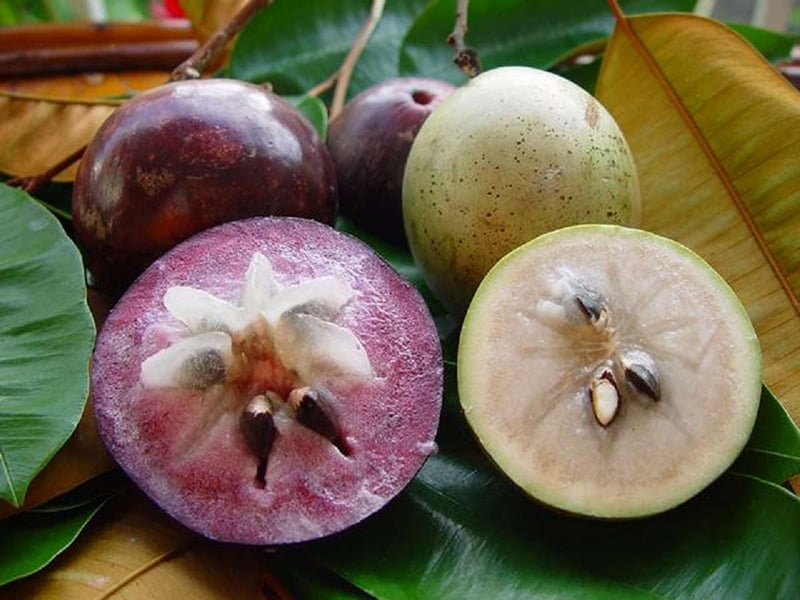
The star apple, or milk fruit, is deeply intertwined with Vietnamese culture and folklore. When ripe, it features a smooth, glossy skin that turns pale green or purplish-pink. The most fascinating part lies in how you eat it: before digging in, you must gently roll and massage the fruit between your palms until it softens completely. At this point, the inner flesh transforms into a refreshing, milky-white juice that tastes sweet and carries a subtle hint of vanilla.
- How to pick the best one: Always look for milk fruits that still have their stems and green leaves attached. The skin should be shiny and taut, shifting to a creamy pink or light purple hue near the bottom. Avoid fruits with wrinkled skin or deep bruises, as these are clear signs that the inside is squashed or spoiled.
Durian (Sầu Riêng) – The “King” of Fruits with an Addictive Twist
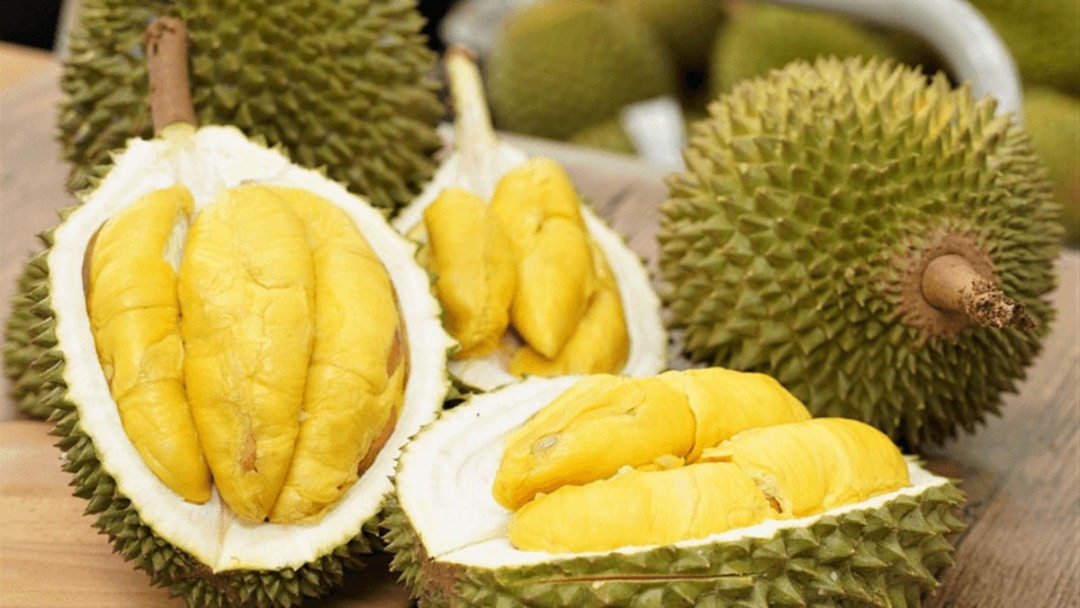
If the mangosteen is the queen, durian is the undisputed king of the tropical fruit kingdom. This is perhaps the most polarizing fruit on earth: those who cannot eat it are deterred by its pungent aroma, but those who fall in love with it become utterly addicted to its rich, creamy, and intensely sweet custard-like texture. The golden, thick-fleshed, and small-seeded varieties (such as Ri6 or Monthong) carry an irresistible allure. Grown heavily in the Southeast and Central Highlands of Vietnam, durian is highly nutritious but also stands as one of the most expensive fruits on the market.
- How to pick the best one: A naturally tree-ripened durian will emit a strong, heavenly aroma right through its shell. Look closely at the spikes: they should be large, firm, and slightly blunt rather than sharp and green. When the seller taps the fruit with a specialized wooden stick, a dull, hollow “thud-thud” sound indicates thick flesh and perfect ripeness, whereas a sharp, metallic “clack-clack” means it is likely unripe or tough. Lastly, ensure the stem is still fresh and moist; if you press your fingernail into it and feel moisture, it is a freshly harvested fruit.
Hoa Loc Mango (Xoài Cát Hòa Lộc) – A Sweet Masterpiece from Tien Giang
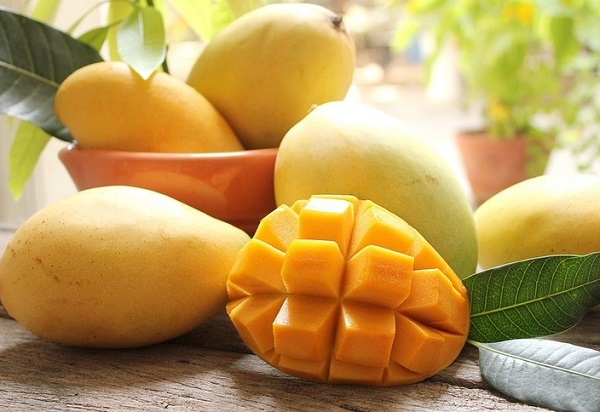
While Vietnam is home to dozens of mango varieties, the royal crown undoubtedly belongs to the Hoa Loc Mango—a legendary specialty of the Mekong Delta. This fruit features an elongated shape and a beautiful bright yellow skin covered in a fine powdery mist when ripe. What sets the Hoa Loc Mango apart is its deep yellow, fiberless, and incredibly smooth flesh, offering a sophisticated sweetness and an intense aroma that fills the room the moment it is sliced.
- How to pick the best one: To avoid accidentally buying hybrid varieties that might be sour or fibrous, opt for Hoa Loc mangoes that weigh moderately (around 350g – 450g per fruit) with a well-balanced, elongated shape. When ripe, tiny black speckles (resembling small moles) will appear near the stem, but the skin should remain taut. Gently press the flesh around the stem; if it yields slightly and releases a rich, sweet fragrance, it is ready to be enjoyed.
2. Smart Shopping: How to Find Clean Fruit and Avoid Being Overcharged
For travelers or those new to local markets, shopping for fruit in Vietnam can sometimes feel like a daunting task due to haggling culture or the fear of chemically preserved produce. To ensure a seamless shopping experience, keep these expert tips in mind:
Head to Organic Fruit Boutiques and Major Supermarkets
If you prioritize food safety, transparency, and convenience, skip the unauthorized roadside stalls and head to established venues:
- Major Supermarket Chains (WinMart, Co.opmart, Lotte Mart, AEON): Here, fruits undergo strict quality controls, come with clear origins, and have fixed prices printed on the labels, completely eliminating the need to bargain.
- Reputable Clean/Organic Fruit Stores (Klever Fruits, Luôn Tươi Sạch, Farmers’ Market…): While prices might be slightly higher than at the open markets, you get absolute peace of mind regarding VietGAP or GlobalGAP standards, along with premium customer service.
Tips for Shopping at Traditional Markets
If you still want to immerse yourself in the bustling atmosphere of traditional Vietnamese wet markets, use this “small but powerful” strategy:
- Check prices beforehand: Walk past a few stalls to ask around or observe how much locals are paying before making your move.
- Eat seasonally: Fruits in their peak season (for example, mangosteen and rambutan thrive from May to July) always offer the best quality and the lowest prices. Out-of-season fruits are usually expensive and more likely to contain preservatives.
- Bargain politely: In local markets, counter-offering around 10% – 20% lower than the initial price is completely normal. Always flash a friendly smile; a warm attitude goes a long way in making the transaction smooth and pleasant.
Conclusion
Savoring tropical fruits in Vietnam is more than just getting your daily dose of vitamins—it is an enchanting journey into the heart of the country’s culinary culture. From the sophisticated sweet-tart flavor of mangosteen, the refreshing crunch of rambutan, the comforting creaminess of milk fruit, to the premium indulgence of durian and Hoa Loc mango, a sweet adventure awaits. Be a savvy consumer by choosing reputable places to buy, ensuring your tropical experience is nothing short of perfect. Happy fruit hunting and bon appétit!