Exploring the 6 Most Iconic Floating Markets of the Mekong Delta: A Journey to the Heart of the River Culture
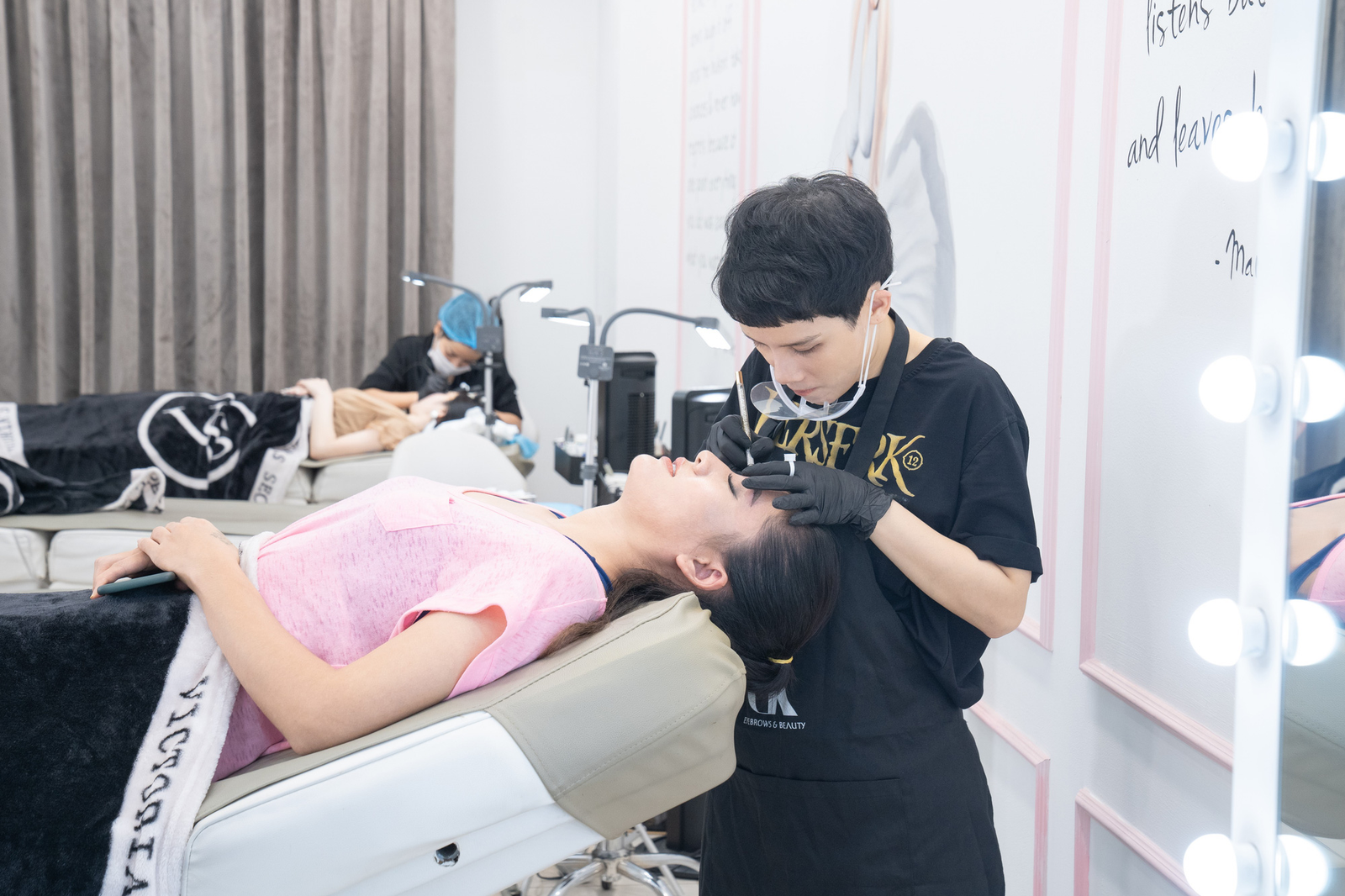
The Guide to Professional Medical Tattooing & Microblading in Hanoi: Natural Beauty, Maximum Safety
Achieving a well-defined face with elegant eyebrows and radiant, plump lips is every woman’s dream. In Hanoi, the beauty trend has undergone a massive shift. Instead of the outdated, overly dark, and sharp look, modern women are absolutely raving about European-standard semi-permanent makeup and microblading. This advanced technique celebrates natural, effortless beauty—delivering instant results with…
|
Exploring the 6 Most Iconic Floating Markets of the Mekong Delta: A Journey to the Heart of the River CultureThe Mekong Delta captivates visitors not only with its lush orchards and sweet folk melodies but also with its vibrant life along the labyrinthine canals. Mekong Delta floating markets have long been an enduring cultural symbol, where trade, dining, and daily activities all unfold on the water. If you are planning a Mekong Delta tour, don’t miss the chance to experience the feeling of drifting along the river, observing the dawn amidst the rhythmic thrum of boat engines and the melodious cries of these unique “mobile stores.” |
|
1. Cai Rang Floating Market (Can Tho) – The Symphony of the Western Capital As the largest and most famous floating market in the region, Cai Rang is an essential stop on any itinerary. Starting around 5:00 AM, hundreds of boats gather here, creating a colorful scene filled with agricultural produce. The most fascinating feature is the “Cay Beo” – bamboo poles where vendors hang samples of their goods so customers can spot them from afar. Visiting Cai Rang, you will feel the bustling yet incredibly liberal rhythm of life of the people in the “Western Capital.” 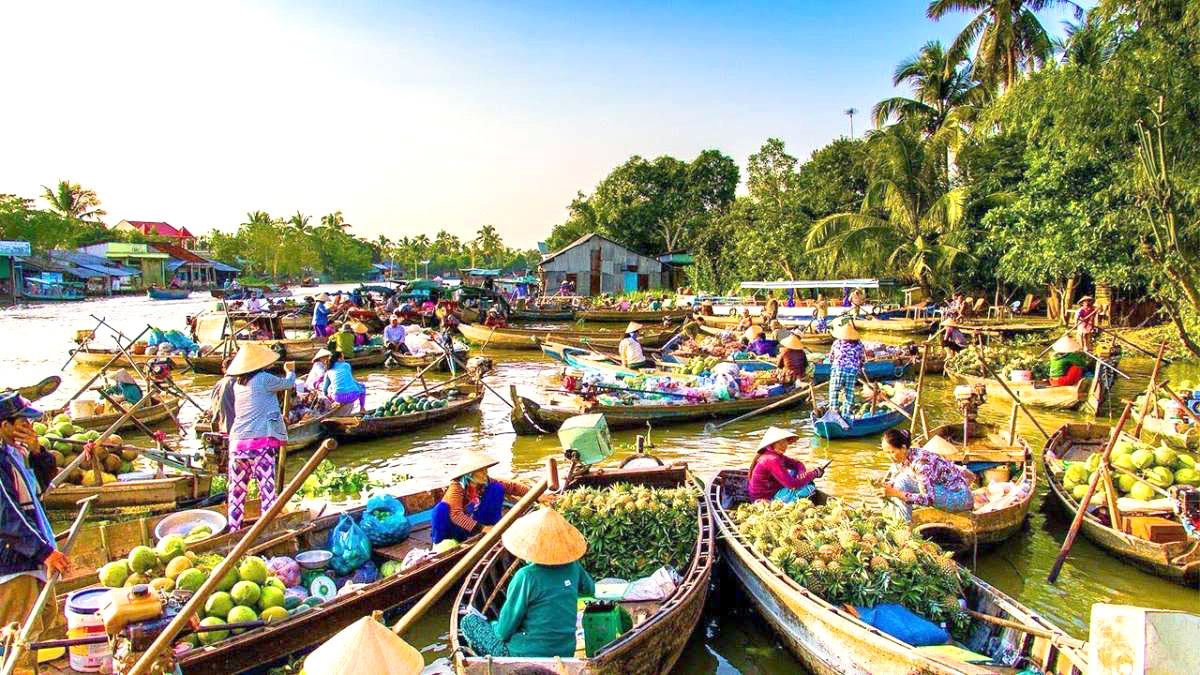 |
|
2. Nga Bay Floating Market (Hau Giang) – Where Seven Rivers Converge Also known as Phung Hiep floating market, this is one of the oldest markets in the region, dating back to 1915. Located at the intersection of seven rivers, Nga Bay offers a vista of abundance and diversity. Beyond fruits, it is famous for handicrafts, household items, and even local wildlife. Although trading patterns have shifted over time, Nga Bay still retains its ancient soul with small “xuong ba la” (three-plank canoes) weaving through larger vessels. 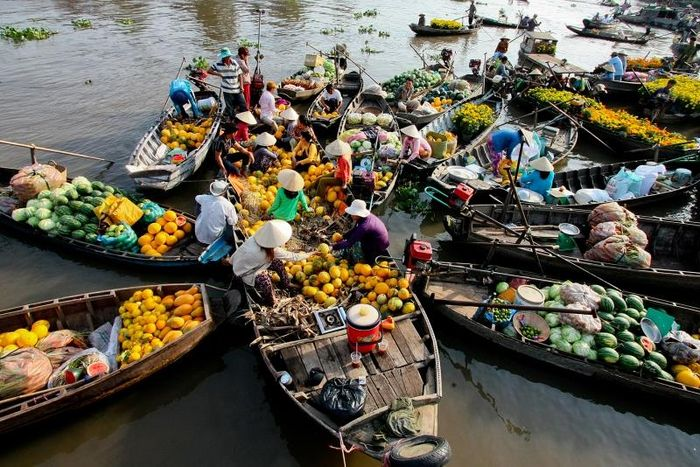 |
|
3. Cai Be Floating Market (Tien Giang) – Beauty at the Border of Three Provinces Situated on a stretch of the Tien River bordering Tien Giang, Vinh Long, and Ben Tre provinces, Cai Be floating market possesses a poetic and tranquil charm. Unlike other markets that only meet in the early morning, Cai Be remains busy until late afternoon, making it convenient for tourists to visit at any time. Boats laden with pineapples, Hoa Loc mangoes, or Lo Ren star apples reflecting on the water create a vivid “shui-mo” painting, deeply characteristic of Southern Vietnam. 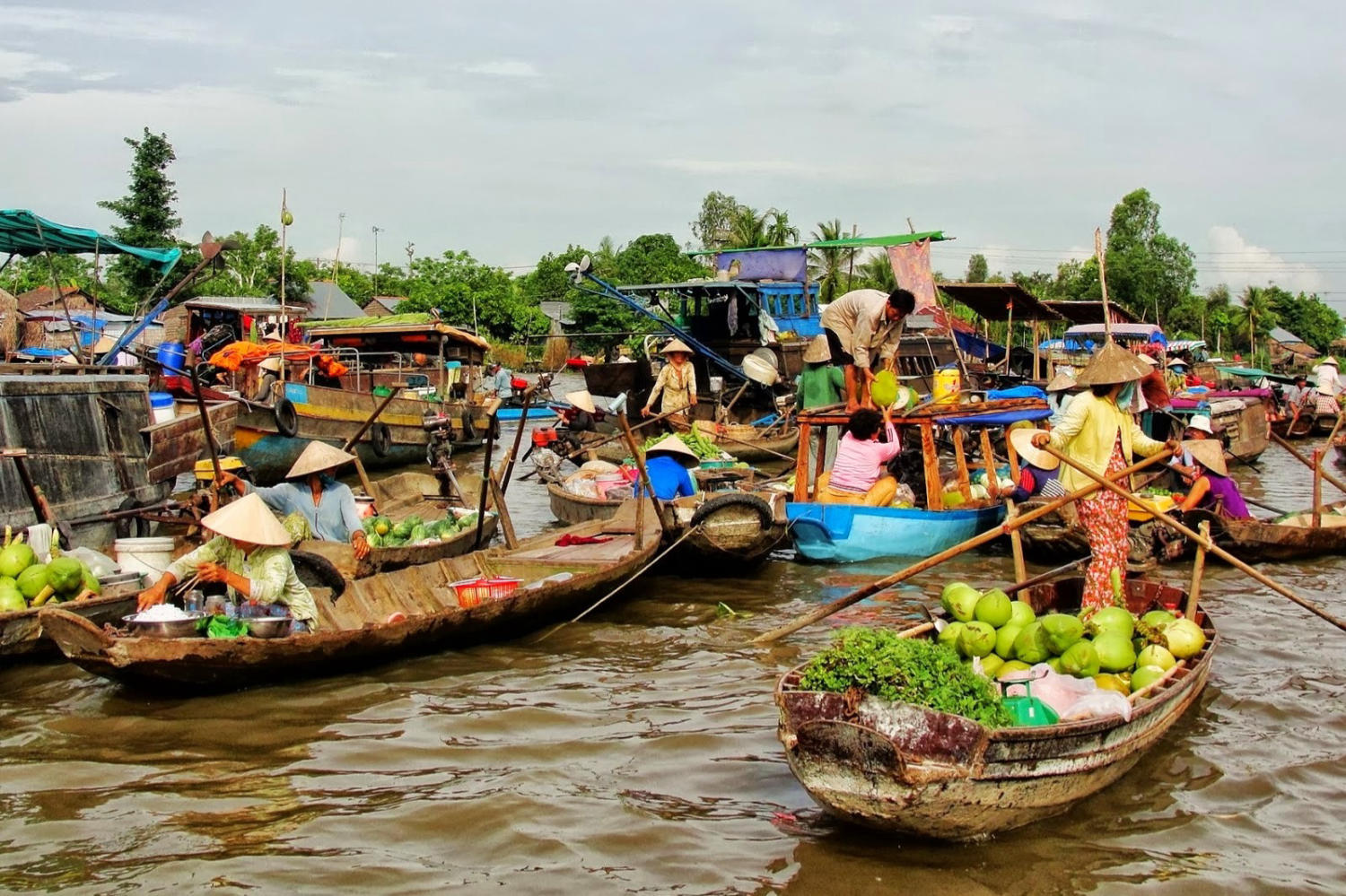 |
|
4. Long Xuyen Floating Market (An Giang) – Unpolished Rustic Charm 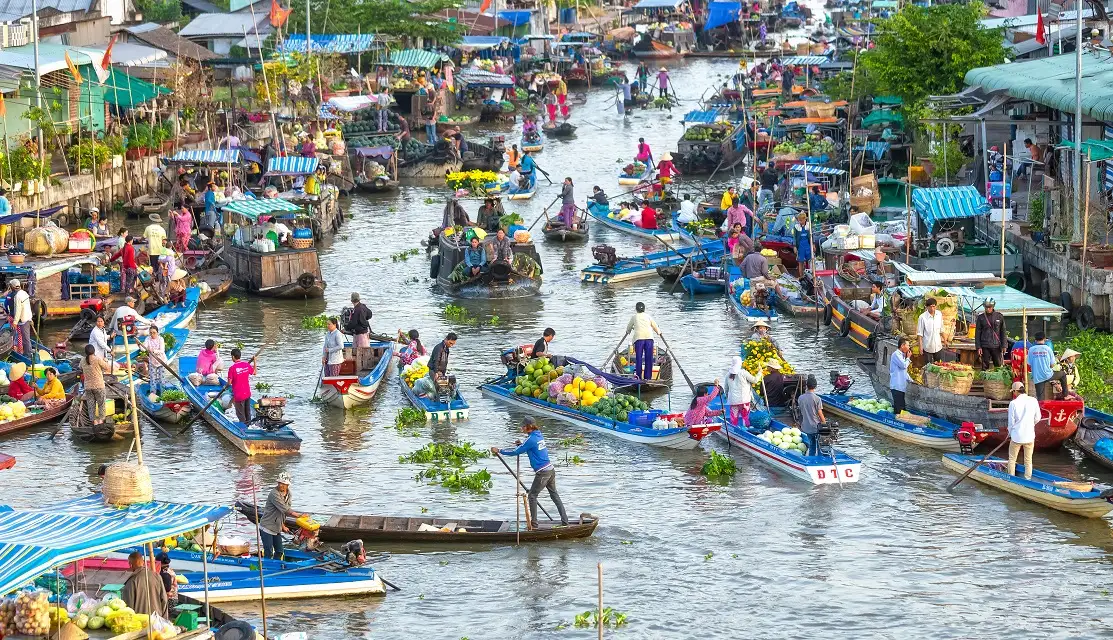 |
|
5. Tra On Floating Market (Vinh Long) – The Market of the Lower Hau River Tra On is the last floating market on the Hau River before it flows into the vast sea. The market operates according to the tides—the higher the water rises, the more crowded the market becomes. A hallmark of Tra On is the boats selling vibrant ornamental flowers and specialized local produce. The sound of waves lapping against the hulls, mingled with cheerful laughter, creates a deeply connected community space. 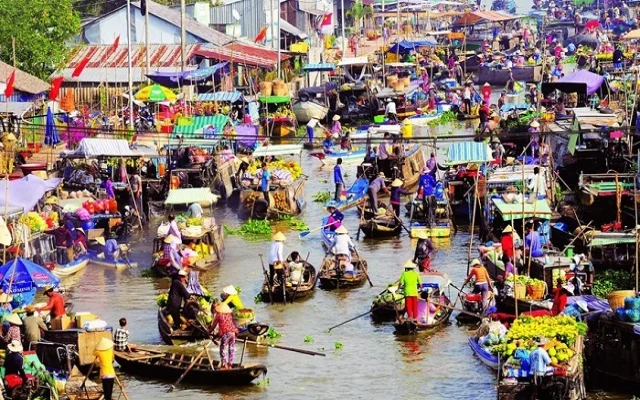 |
|
6. Nga Nam Floating Market (Soc Trang) – A Fascinating Crossroads True to its name (“Five-Way Intersection”), this is the meeting point of five rivers flowing towards Ca Mau, Vinh Quoi, Long Mỹ, Thanh Tri, and Phung Hiep. This geographic convergence has turned Nga Nam into a very busy transit hub. You can find almost every Mekong Delta specialty here, from fragrant rice and vegetables to fresh seafood. The flickering oil lamps on the boats in the early dawn create a hauntingly beautiful and unforgettable atmosphere. 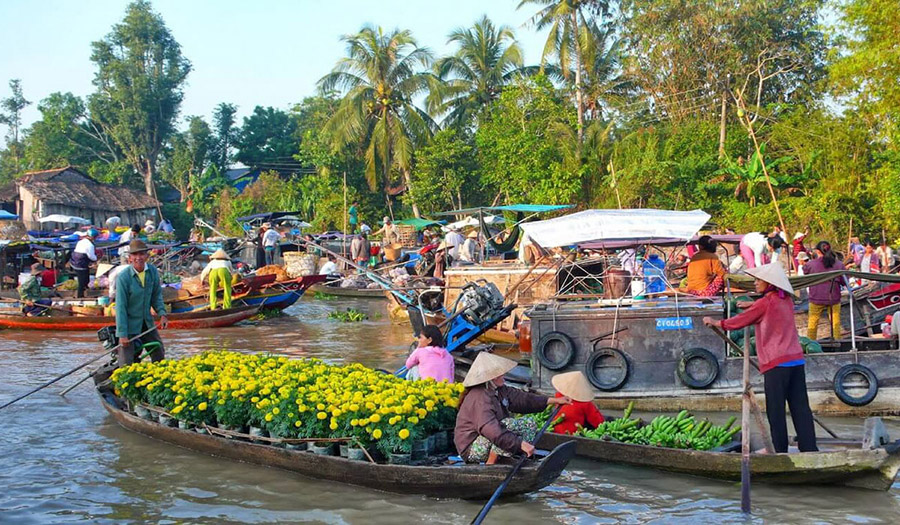 |
|
“Drifting” Breakfast: A Culinary Experience on the Water One of the most precious experiences when visiting a floating market is enjoying breakfast right on the waves.Market Hours: Markets usually start very early, around 4:00 AM – 5:00 AM, and are at their busiest between 6:00 AM – 7:00 AM. You should arrive early to enjoy the cool night mist and witness the most vibrant scenes.Must-Try Dishes: Don’t forget to order a bowl of hot “Hu Tieu Lac” (Shaking Noodles) or Bun Rieu Cua (Crab Rice Vermicelli Soup). It is called “shaking” because the bowl constantly wobbles with the rhythm of the waves. Slurping the rich, flavorful broth and sipping a “Ca Phe Kho” (Clay-pot Coffee) amidst the vast river space is something no luxury restaurant can replace. |
|
ConclusionMekong Delta floating markets are more than just places for trade; they are a cultural treasure trove of the Southern people’s soul. Though modern life brings many changes, the boats laden with produce and the warm hospitality remain, waiting for travelers to explore. Once you visit a floating market, you will fall deeper in love with the simplicity and the resilient vitality of this “Land of Nine Dragons.” |